Jun 13, 2011

No seriously, where *are* the women?

  
In this week’s Guardian books podcast, Sarah Crown asked Orange Prize winner Téa Obreht whether it felt “limiting not to be competing with men”. Because, you know, the competition wouldn’t have been as fierce among “just” women. Cause they’re like, worse writers, innit. Just ask VS Naipaul. No, to really prove one’s chops, one should strive to compete against men, without all this “positive discrimination” stuff.

Well, you know, it turns out that the majority of books reviewed in newspapers and magazines are written by men. And the vast majority of the reviewers are – you guessed it – men. But this men-writing-about-how-jolly-good-men-are business is not as “positive discrimination”. Nope, that little private club is all just handy dandy and above board. It’s only when women seek to circumnavigate the cosy unofficial “cultural femicide”, as Bidisha calls it, that we saunter into an ethical problem, or even just one of professional credibility.
   

It reminded me of Richard Dawkins writing in The Ancestor’s Tale (boring book, pretty pictures) about how spurious and wicked racism is. Really, brays Dawkins, any simpleton can see that discriminating on the grounds of race is evil; but surely we do not need to compound the harm by taking any steps to rectify it that are as radical as the original discrimination! By all means, condemn racism, object to it, look down you white-dude scientific nose at it, but whatever you do, don’t actually do anything about it, or God, sorry, Dawkins, knows where we’d end up!

To which I say: meh. Meh to the idea that I’m so stupid that I’ll accept Hilary Lawson’s feeble excuses for running a cultural festival with 26% female representation. Meh to Start the Week with Andrew Marr, who still only ever have one woman on their panel each week. Meh to the notion that women being excluded from competing against men in sports events is "proof" that they would fail if they tried. Meh to those who think I can’t do the maths and arrive at a number bigger than what it currently is – in the arts, on the radio, in academia, in government – when I know that more women graduate from university, more women write and publish books, more women work in the various arts & culture institutions; there seem to be more women everywhere these days, in fact, except at the top.

And, well, y’know what? That’s just bee oh are ay en gee boring at this stage. Enough with pretending that  old white men like Dawkins and Roth have anything left to say about the world that a thousand old white men haven’t said already. I am just not that into them anymore. This isn’t even really political, but a genuine lack of interest in the same old points of view, endlessly rehashed. Unlike Dawkins though, I do want something done about it, and fast (before I expire of ennui, frankly). So I’m going to the “Where Are The Women?” follow up event and planning meeting tonight, to talk to smart women about what we can do to improve the scenery in our cultural landscape. Be afraid, old white dudes; be very afraid. :)

Oh and hey, Sarah Crown? That was a really, really stupid question. Really.
 

May 24, 2011

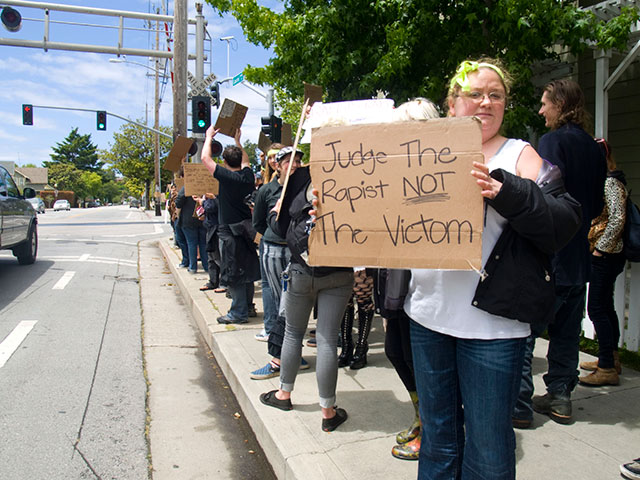
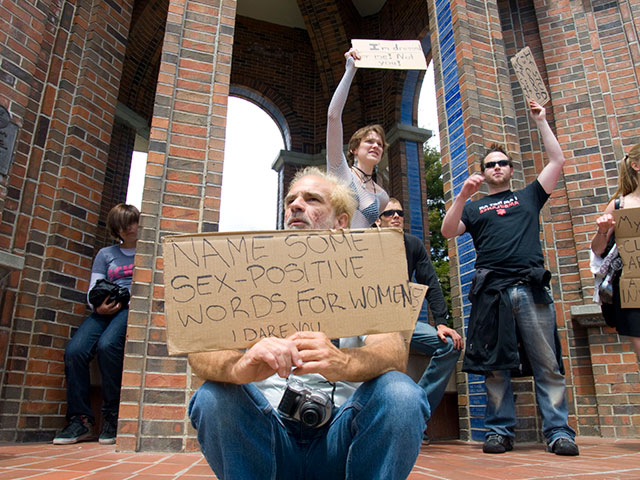
What should you wear to a SlutWalk?


I have a very complicated relationship with the amount of coverage or display that my skin gets. I think most women of my background or similar - secular feminists who grew up in a traditional, religious society - would recognise the dilemmas that I had with seemingly frivolous things like skirt length while growing up.

In Jerusalem, where I grew up, what a woman wears immediately speaks volumes about her religion, her values, even her politics. Whether your skirt brushes the ground (settler), is modestly below the knee (conservative), is a voluminous part of a Mother Hubbard-like dress (orthodox) or is revealingly short (secular) gives clues to other parts of your life: what you eat (kosher/treif), who you vote for (left/right), where and when you socialise (at home or in a club on a Friday night), your sexual politics (patriarchal/permissive). The signs are not infallible, but they are ubiquitous and strong in a way that simply doesn't exist in the secular west, except for the most pious Jewish or Muslim women. And people in Israel routinely use these signs to facilitate everyday interactions, like knowing whether to shake hands with a woman, ask her for her number, ask her for directions, all kinds of normal stuff. It's not stereotyping (much), it's common sense.

So every sartorial choice is significant. Wearing light clothing (which can be seen as only sensible in the baking Israeli summers) is not just controversial but potentially dangerous. Heck, just wearing trousers can get you shouted at or even attacked with ink bombs or stones (on one memorable occasion, potatoes. It was as weird as it sounds). Wearing concealing clothing can have less violent but no less othering effects in certain parts of civic and cultural life.

So far so normal: even here in the UK, we can more or less understand the notion that covered skin = traditional attitudes. But in the febrile political and social climate of Jerusalem, certain acts of covering up can become just as transgressive, in a more nuanced way, as acts of revealing. And I don't mean transgressive like wearing the Niqab: transgressive as in, it messes with people's heads because they don't know where to slot you on their mental map.

As a teenager, I came to resent the implicit prohibitions on certain articles of clothing. Why can't I wear long skirts? Why shouldn't I wear turtle-neck sweaters? It's cold in winter! It wasn't about rebelling against a culture of objectification or anything feminist like that - I just rebelled against being told, even by "my own side", what to wear. So I wore long skirts while out drinking on Shabbat, and men were completely bamboozled by an inability to know whether they could approach me or not (and whether there was likely to be anything in it for them, frankly). I wore low-cut tops with skirt suits & opaque tights, earning myself some of the most vicious looks I've ever gotten from religious matrons who scanned me approvingly from the feet up until they came nose-to-boob with my cleavage. I played around with backless, slashed maxi dresses and see-through muu muus. I had fun, and pissed people off, which was kind of the point a lot of the time.

So, what am I really saying with this? I guess what I'm saying is that there is no "right" way for a woman to dress. Whatever we wear, it will be transgressive in some circumstances, and occasionally for counter-intuitive reason. That's why, even though I'm not mad for the supersexyfunfeminist aesthetic that's developed around SlutWalk as it proliferated around the world, I think that women choosing to wear revealing and conventionally "sexy" outfits to these events is not as straightforward a concession to the patriarchal beauty ideal as might first appear.

It's true that we live in a society that pushes women to display a narrow, manufactured image of conventional femininity to an implicitly ever present male gaze (if all males were teenage porn fans, anyway). But that by no means makes a choice to reveal one's body uncomplicated as regards patriarchy. First of all, the type of body that is shared is key: to put on display a body that deviates from the strict demands of the ideal is an extremely threatening act, because it re-appropriates the ownership of what is sexy from the mainstream to the individual.

I'm not talking about bodies with piercings or tattoos; those have been more or less absorbed by the industrial beauty complex. I mean non-thin bodies, non-young bodies, non-white bodies, non-beauty compliant bodies (not to mention disabled bodies - the horror!). Put a boob tube on one of those, and suddenly you are very far from pandering to the patriarchy; you're on a collision course with it. (Here are some examples in no particular order, so as not to label any of these brave women and men with labels they may not recognise as being authentic to them)

Even more central to the SlutWalk concept (whatever that might be - more on this in a moment) is the type of outfit that is allowed to be considered "sexy". Who gets to define sexy? Most of the time, not the women wearing the outfits. There will always be some arbiter to say what is too much, what is too little, what is inappropriate, or different, or just weird (you decide which is which). As I learned when I was a teen, the mere act of deciding what to wear for yourself and deciding for yourself what to call it - sexy, modest, chic, daring, stylish, conservative - without reference to the prevailing definitions, is an act of immense rebellion, something outrageous to fling in the face of the patriarchy just because you can. These days I've sworn off wearing skirts completely by the way, and funnily enough, that is a choice just as controversial as any skirt of any length has ever been.

Am I ambivalent about SlutWalk? Yes. Do I wish it didn't use that word? Yeah, kinda (though the process of its rehabilitation in my eyes has been greatly helped along by this excellent piece by the excellent Germaine Greer - now here's a woman who know that just living life for yourself is a provocation!). Do I agree with Sadie Doyle that a simple idea can become merely simplistic as it gains scope and popularity? Ayup. Do I want to metaphorically but nevertheless emphatically smack young women who are grooving out on their petty rebellion, using SlutWalks as an occasion to bash boring old feminists? Oh boy, do I ever. Well, look at them very sternly, anyway.

But to my fellow feminist who are concerned that the word slut + provocative outfits equal capitulation to retrograde notions of femininity and a display of female compliance with patriarchal norms, I'd just like to say that, well, perhaps you'll find that it's a bit more complicated than that. I'm not saying that I've come to stop worrying and love SlutWalk, but hey, you know what? I can't meet the challenge posed by this SlutWalker. Which tells me that looking for an answer may just as well start here as elsewhere, and I intend to at least have a good look.
 

Apr 16, 2011

Equality is nothing but red tape?

 
As part of its '"red tape busting challenge", the government is proposing to get rid of equality legislation. It's not clear whether they think scrapping the one Equality Act 2010 and reverting to the multiple bits of pieces of law we had before is good for reducing red tape or whether they just think equality is a bore and wish they could "liberate" the "market" from it, but they're asking for people's opinions. Below is mine.

***

The Government's proposal to "scrap" the above act as "red tape" is revealing in the extreme. To explain by way of example:

- Section 66 of the Act stipulates that employees should not have a clause in their employment contract that  is less favourable than another employee's employment contract, on the grounds of difference of sex. It basically says that all employees should be entitled to have equitable and similar terms of employment; this seems such a basic requirement of a functioning economy that I am surprised to see it legislated for: I'd have expected it to simply have been the case everywhere, all the time.

Evidently I, and other members of the public are naive in not understanding that the simple requirement to not write prejudicial contracts for employees is a sizeable enough burden of "red tape" on companies that the Government sees fit to have it "scrapped".

What evidence does the Government have of this? Have employment contracts in the public sector been scrutinised to show that so many of them are inequitable as would require a major investment of resources by employers to correct? If so, why id the Government not sharing this important and worrying information with its public prior to proposing "scrapping" the legislation that would correct this state of affairs?

- Section 74 of the Act refers to the provision that should be made for a woman not to lose entitlements to pay increases and bonuses that she would have been entitled to had she not gone on maternity leave, because she went on maternity leave. the perceived need for this clause implies that at the moment, employers are depriving women of pay rises and bonuses they had earned while in full time work, because the pay out time falls within their term of absence - which is self evidently inequitable, bordering on fraudulent.

By proposing to "scrap" the legislation, the Government is signalling to employers that depriving employees of pay they had legally earned is an allowable action in some circumstances (when the employee is a woman, and when she is not physically in the office due to statutory maternity leave).

This is a dangerous precedent to set, and to my mind speaks to the fact that the government is proposing the "scrapping" out of a feeling that employees who "really matter" to "alarm clock Britain" (read: men) would simply never be in a position where their pay can be simply not given to them, for some seemingly plausible excuse - a dangerous and as I say, revealing assumption to make.

I am dismayed and alarmed that the Government of Britain considers protecting the people of Britain from such obvious unfairness and rapacity as illustrated in the two brief examples above unnecessary "red tape", rife for "scrapping". It shows a commitment primarily to a narrow and shrinking constituency: that of people whose lives are never touched by discrimination.

The reality of this country is that many people can and do discriminate on a variety of grounds against their fellow human beings, for reasons of principle as well as simple profit. That the Government does not consider it part of its mandate to bring these people to book is a sad reflection on the state of social cohesion in this country, a step so far removed from the rhetoric of fairness and "Big Society" as to be farcical.

My recommendation to the Government is to implement the Equality Act 2010 in its entirety without delay, especially with regard to the new provisions such as pay equality audits. Only in an environment of transparency can fairness be seen as well as talked of, and only then can we begin to build a truly big - in the sense of broad, inclusive, and all-encompassing - society.

You can find the consultation papers and respond here. Hat tip to Anna for sending round the link and prompting me to comment!
 

Apr 5, 2011

Limiting access to abortion is about hatred of women, nothing else

  
Here's what I don't understand about this most recent attempt at attacking women's liberties from Nadine Dorries: under British law, and abortion can only be granted if the pregnancy risks causing "grave permanent injury" to the physical or mental health of the woman. Two physicians must countersign any decision to grant an abortion after having interviewed the woman, meaning that both need to be in agreement that likely mental health harm may indeed occur as a consequence of enforced pregnancy, labour and motherhood. Unless you live in Northern Ireland of course, in which case fuck you and your mental health, who gives a shit.


Likewise in order to gain access to the so called "morning after pill", a drug that inhibits conception (not terminates a pregnancy, as is often misleadingly claimed), one needs a prescription, which means having at the least a telephone conversation with a GP and explaining the circumstances to him, justifying one's fears and decision to request the drug and so on. Sharing quite a bit more detail about one's sexual activity than a GP would normally be entitled to pry into, frankly.


Even in the case of the contraceptive pill - which is rightly and admirably provided free of charge in the UK - the GP is a gateway through which women must access the treatment they need and deserve. Needless to say, more invasive forms of contraception (IUDs, tube ligation etc.) require even more negotiating, and easily fall prey to the caprices and clinical prejudices of individual doctors.


I know that some people, mostly those who will never need an abortion (read: men and Anne Widdecombe) have this notion - half nightmare, half sexual fantasy - that since the 1967 Abortion Act was passed, women haven't needed to bother with "taking responsibility" for contraception, because all you need to do is walk into Boots, five months pregnant, spread your legs for 20 minutes, and have the inconvenient consequence of your filthy immoral lifestyle taken out, immediately and for free.


Well sorry lads, but it ain't like that at all. Women are actually curtailed already, not only from freely and directly exercising their right to bodily autonomy in case of an unwanted impregnation (a right that, unlike in the US, they don't actually possess under UK law), but we're not free to access most forms of contraception how we want, where and when we want, either.


We already, in effect, have to get "mandatory counselling" before making any reproductive choice, which means that while I completely agree with Laurie Penny's point that with this proposal, Dorries & Field are treating women as if they were all alcohol soused sows who take all comers against the wall for the simple pleasure of ripping ickle babby toesie wosies out of their own uteruses with unwashed hands, in matter of fact she shouldn't be all that worried, because hey ho, British law already kind of treats them like that anyway.


So no, I don't really buy the "counselling" angle. I don't for one microsecond believe that any fibre of Nadine Dorries's tiniest organ has any faith whatsoever that said "counselling" is either necessary or beneficial. This is about using these so called "crisis pregnancy" centres to spread lies, misinformation, false medical statistics, false mental health statistics and shame, with one purpose and one purpose only: to force or manipulate women into pregnancy and labour against their will, and against their initial instincts and better judgement.


Think for a moment just how cruel this would sound if the ickle babby toesie woesies weren't being used as a smoke screen to distract attention from the reality of it: someone wants to take your body, and force you to have something inside of it for nine months, something that will change your metabolism, affect your sleep, digestion and blood pressure, something that will distort your bones and stretch your skin, rearrange your internal organs and change the way your brain chemistry works, and will eventually burst out of you, Alien-style, with great pain and possible grave and permanent injury.


And we think the Spanish Inquisition were evil for only hammering nails under people's fingernails for a few hours.


Why would Nadine Dorries want to do this, I hear you ask? Well, we could tie ourselves into knots claiming that she just loves ickle babbies (she's against welfare for actual babbies, so not sure on that one), or how the foetus has rights too (it doesn't, not under any accepted conception of human rights law), or how it's all about religion and what God said (nothing, abortion isn't mentioned in the Bible). Or we can just use Occam's Razor and admit that opposition to abortion is probably about hatred of women and a desire to punish them for being so hateful with enforced pregnancy, labour, and motherhood. Because that's what it is.


This isn't the first time that US-style anti abortion tactics have been imported to the UK, nor is this idea of mandatory counselling an original one. There are many states that have all sorts of laws making it more difficult for women to access abortion: waiting period laws, parental notification laws, mandatory counselling, mandatory ultrasounds and so on. 


The reason they gained purchase in the US, and the reason I fear they will gain purchase over here - for all that it's tempting to dismiss Dorries as a monomaniac crank - is that they play to the well established, unexamined, but deeply misogynist belief that women are just too stupid to know what they want, and that if we don't rub their noses good and hard in the reality of their physical condition, there's no way that they'd be able to make an intelligent choice.


Up to now, I've mostly not really worried about good old Nadine. Women in the UK are not dependent on the whims of private corporations and individuals for access to health care, and people here do in general have a higher level of science understanding that protects them from being influenced by grisly doctored images of fake "aborted foetuses" wielded outside clinics. But this one I fear may stick, and it's telling that she's already got a man to co-sponsor the bill with her. 


British people are just as likely as any other people in the world to be of the implicit belief that women, rather than being fully sentient human beings, are a special, slightly brain-addled case of the homo (hah) sapience species, - homo sapience birdensis, perhaps? - too easily distracted by footwear, cocoa derivatives and the colour pink from making really serious decisions or genuinely understanding what is going on with and inside their own bodies. Liz Jones has made a career out of playing up to that stereotype, and I can just about see the Mail disingenuously supporting this initiative as a "reasonable" attempt at "balance", feeding neatly into the bizarre implied argument that GPs somehow have a "vested financial interest" in increasing the number of abortions that makes them unreliable single sources of advice (which is probably the craziest and least well-tailored bit of this American import: fair enough when your doctor works for a huge corporations, but GPs? Really? They're only like the most trusted professionals in the country).


While Nadine Dorries and Frank Field waste Parliament's time and taxpayers' money peddling this hateful bullshit as a cover for their extreme woman-hating, by the way, funding to a wonderful organisation that really does educate people about reproductive health and abortion is likely to be slashed. Do dig in your pocket for that fiver that'll help them reach their extraordinarily modest goal of £30,000 to continue their awesome work, even if you can't really be bothered getting excited about al this Nadine Dorries business.


Apr 1, 2011

Silly Trolls (in ur Westminsterz, running ur countryz)

 
It could only have been an April Fool. I mean, seriously, who could utter a sentence like "feminism replaced egalitarianism" and not be pulling our leg?

Someone who believes in equality among people, but doesn't believe women are people, it turns out. Because the government minister in charge of higher education, "Two Brains" Willetts himself ("half-brain" Willetts is an irresistible joke that should not longer be resisted, I think), apparently does genuinely believe that whereas giving equal rights to women was in principle a good thing, it was, in the long run, detrimental to equality.

Chew on that one for a bit.

This is the man charged with deciding the future fate of academia in this country. Who has also recently commented that university fees are progressive, because women earn less than men and so will have to pay off the debt more slowly. Yes, a government minister in Britain in 2011 believes that the wage gap gives women an advantage over men - a Scott Adams level of delusion, frankly.

Now, it's a rapidly coalescing consensus that this government is inflicting sustained and systemic violence on women: cuts to child benefit, unprecedented mass redundancies, decimation of women's shelters and rape crisis funding, withdrawal of funding for legal aid and help in getting child support payments - these are all things that will trap the most vulnerable women and children in potentially dangerous situations through poverty and a simple lack of somewhere to go, likely pushing the number of women murdered by intimate partners from 2 a week to something higher.

So I don't necessarily know that it surprises me that we are governed in part by a man who hates and fears women. Because it's only fear and hate that could make an otherwise intelligent, well educated person miss the three massive elephants in the room with this argument: that wages and working conditions have been stagnating since the 80s, feminism or no; that women have not achieved anything like equality, and even for the upper wage brackets economic inequities and the pay gap persist; and that class inequalities and gender inequalities are not Lego blocks that you can mix and match however suits you to construct a plausible sounding complaint, but disparate and complex economic phenomena, duh.

No, surprise was not the emotion I felt most keenly; it was more bafflement at the fact that misogyny would make someone so heedless of embarrassing themselves in public. What did surprise me was seeing Page 5 of the print edition of the Telegraph today. It was a half-page, with the bottom half given over to advertising, and the top half containing the following headlines:
Feminism 'held back ambition of working men'

Mothers being forced back to full-time work

Female drinkers 'a burden on the NHS'

And...
Nice Baps, shame about the name
Oh and also a piece about rude place names titled "Silly Trolls", which was what made me think the whole page might have been a leg-pull.

Because seriously, how can a publication with any sort of pretensions to newsworthyness concentrate so many misogynist tropes - objectification, vilification of feminism, moral panic about misbehaving women, mommy wars pearl-clutching - into one page, and expect to get away with it?

It's seems to me that the Telegraph - a newspaper I used to respect even when I disagreed with it - is trying to pander to the illusions of its readership; illusions about always being middle class, about staying married and not needing to go to work to survive, about not needing feminism because "we have equality now", about the cuts being necessary to bring those lazy, shiftless, drunk poor people in line and not having any effect on "us". It's decided to act as a mouthpiece to a callous government that is hoping to get away with murder because its core voters are too alienated and too smug to realise that blinking at the proposed suffering of others will have implications for them, direct or otherwise.

A lot of people have variants of these illusions. Most if not all of us at times judged or blamed the unlucky, the unsuccessful, thinking "I would never let that happen to me". But of course these people didn't "let it" happen. Bad things happen for random reasons, or for structural reasons that are sometimes too big to see.

And one of the reasons bad things continue to happen to women - bad things like under-employment, poverty, violence, rape - is that we live in this environment of constant, unremitting blame, where a major daily national paper can afford to dedicate an whole page to saying a variety of untrue and damaging things about women and their struggle for equality, and no one but a bunch of angry feminists would even notice, let alone comment.
 

Mar 28, 2011

Violence, schmiolence

 
Being Israeli, I'm pretty good at spotting narratives of delegitimisation. Telling someone "you have no right to an opinion" (direct quote from an Oxford based human rights lawyer, that) is a good way to avoid engaging with their argument, and is usually the first recourse of people with strongly entrenched positions who do not want to admit any challenge to their views.

Delegitimisation is the bread and butter of the rhetoric around the Israeli/Palestinian conflict, of course: all this "terrorist organisation!" "illegal state!" nonsense being flung about, as if any of that actually means anything to the resolution of the problems at hand. But both sides, unfortunately, are rich in agents to whom the only acceptable solution to the conflict is more conflict, so this type of discourse persists.

Delegitimisation of course is also the daily experience of feminists, online and elsewhere; as Rebecca Watson of Skepchick recently and poignantly said, the new definition of offensive is a woman with an opinion (actually that's an old definition of offensive, but yeah).

Anyway, my point is, I'm relatively good at spotting when an argument is being made that is not an argument at all, but a way of shutting someone up. And the pearl-clutching around the so-called "violence" in London on Saturday is just such a narrative of delegitimisation. A couple of asides on that:

Aside #1: What fucking violence? Like, seriously, I was there. It was the world's most boring walk from Embankment to Hyde Park. There wasn't even any chanting. A few vuvuzelas, some lip service of booing and hissing at the Ritz (note to future generations of protesters: genuinely rich people stay in Knightsbridge), lots of mass produced flags and placards. Buggies. A certain unmistakable Boden quotient. That's about it. We sat on the grass in Hyde Park for about an hour, watching more and more thousands of people stream into the park off the march, and not one thing occurred to make me raise an eyebrow. Elsewhere, we're talking about some paintballs, a bonfire in a well-ventilated and non-flammable area, and a sit-in, from what I can make out. Broken windows != violence, Einstein. That's damage to property, which is not at all the same as damage to people. I've faced Hassidic five year olds lobbing potatoes who had more violent impulses that the marchers on Saturday did. 
 
Aside #2: So fucking what? Since when is violence not an acceptable form of political expression, eh? When people in other countries (dum dee dum, Tahrir Square, lah dee dah, Green Revolution) clash violently with their governments, we invariably blame the governments, assuming that the state, as the holder of the monopoly on violence, is reacting disproportionately to legitimate protests. But when it happens here, suddenly it's the protesters who are out of order. Why? If this had happened in Lybia there would be (non violent, hah) demonstrators outside the embassy as we speak.

In short, this whole business about so called "violence" is nonsense. The truth of the matter is that there is no way to monetise the spectacle of half a million people walking very slowly. It's damned dull, and while I saw a few journos/photogs snapping picks of us in the early stages, I note also that it's quite hard to locate photographs of "violence" that don't have another photographer or ten in them. The media is reduced to use itself to beef up the numbers of disturbance causers, and frankly between them creating the temptation of playing up and the police provoking reaction by being heavy handed (which they emphatically were not, on the main march route), it's a testament to the famous bloodlessness of the English that nothing really serious had kicked off.

Oh yes, but nothing like that should have happened at all, I hear you say. If it had all gone off peacefully without any side demos, we wouldn't be hearing about violence in the news all the time! We'd be concentrating on the main issues! This is very unfortunate! The violent protesters have hijacked the conversation!

Fiddlesticks.

As narratives of delegitimisation go, what's remarkable about this march is just how many different ones have been deployed against it. The anti-cuts movement in all its forms is continuously and concertedly attacked with so many disingenuous non-arguments that the mind reels - no wonder we can't have a proper conversation about the cuts. No wonder even the Labour party big cheeses stand agape at the onslaught of gold-plated bullshit being flung at them. Short of standing at the dispatch box and repeating "Mr Speaker, my main difficulty here is deciding whether my right honourable friend the Chancellor is lying or speaking in tongues" over and over, I don't see how Ed Balls, let alone a bunch of kids on Oxford Street, can outflank the government's torrent of disinformation. Consider:

"They're all a bunch middle class hypocrites", or the Grumpy Old Man Stance: This was the first in a series of ad hominem attacks on the people behind the movement, back in 2010 when the student demonstrations were at their height. It's an easy frame: university students can be painted as a bunch of spoilt, over privileged brats who have no "skin in the game", because they have rich parents who'll look after them. They have no daytime responsibilities like "real jobs", and are just indulging a preference for trouble making. The reason this is delegitimising is not the obvious facts that A Level students protested too, or even that not all university students come from privileged backgrounds; the reason is that it takes it as read that nobody will look at the argument and go "so what? Aren't middle class people allowed to care about the future of this country too? Aren't these students, however affluent their childhoods, right to worry that the growth-deadening cuts agenda will leave them struggling in future, or that they will bring up their own children in a darker, more unequal, more bitter Britain?".

It's the "identity politics" switcheroo beloved of right wing demagogues: a) if you are part of the group affected, you're unreliable because you're too emotionally involved, have a conflict of interest, are just being selfish; b) if you're not, you don't know what you're talking about, and how dare you to insult those people by pretending to speak on their behalf? In this case it skillfully cuts both ways - if you're a student from a middle class background, it's b), if you're not middle class but still a student, a) takes care of you.

"They're all a bunch of freeloaders", as above, the Tabloid Formulation: Applied to anyone on benefits, who has ever been on benefits, who may in future potentially need benefits, or who works in any organisation associated with benefits in any way, up to and including the entire apparatus of the welfare state. I think the only people exempted from the virulent, almost Tea Partyesque loathing certain groups feel towards anyone they think may be getting something "for nothing" (meaning, in return for nothing more than being a taxpayer and a fellow human being) are actual serving soldiers and well behaved white Christian toddlers. It's a good one, because you can use it against basically anybody with any involvement in the welfare state and who is opposed to the cuts. Mother in receipt of child benefit? No right to an opinion! Disabled? We don't want to hear from you! Unemployed? Get a job before you open your mouth, you lazy bastards. None of the above? Who are you to talk, then?

"They're all a bunch of overpaid public sector workers with gold plated pensions", also as above, Telegraph Variation: This one really does get my goat in a massive way. I loathe and despise that the conversation about the cuts has become a conversation about lost incomes. Not that putting half a million people on the dole is not big news; it is, and those people are mostly women who already draw very meagre salaries (cause they're so greedy, duh) and don't have big safety nets to fall back on, which is exactly why the conversation should be about the cuts to services instead. I hate the way papers like the Mail and the Telegraph, and much of TV & radio news too, talk about public sector workers like all they're there to do is draw a salary. Who teaches your children, fixes those potholes you hate so much, triages you at the hospital, adjudicates your divorce, issues your tax refund? Public sector workers, that's who! How have we allowed the media to dehumanise people to the point that we just see them as walking paychecks, as an unnecessary expense, instead of seeing their contribution to the big society we're supposed to be so keen on?


"There is no alternative", or Misdirection: Er, the whole march was titled "March for the Alternative". If you say there's no alternative and half a million people come to London to tell you different, and you still claim that no one has bothered to come up with an alternative, you begin to look a little bit demented. But even before the march, it's a straight up lie that nobody had come up with an alternative: there were lots of ideas, some of them Keynsian, some of them more moderately neoliberal, but they were there. The government's refusal to acknowledge them was simply a symptom of their refusal to consider them. There is no plan B, and however many envelopes labelled "Plan B" you send to Number 11, Number 11 ain't listenin'. They've even gone as far as to make sure there's as little as possible to listen to, by forbidding the OBR to consider alternatives (against the advice of the IMF - see Recommendations in section 1). So, yeah. Not so much a delegitimisation tactic as straight up denialism of the "zombie argument" variety beloved of creationists and James Delingpole.
 
"It's all Labour's fault", or Deflection: This is both a) untrue and b) nonsense. It's not Labour's fault that the banks needed bailing out. We're not going to go into whose fault it exactly and in detail is (looooong answer), but it is certainly not the fault of one political party, in one country, during one decade, that the global financial system imploded. And if it were, so what? Who's in power now? You, yes? And you're how old? Older than five, yes? So WTF difference does it make who made the mess? Cleaning it up without making a bigger one in the process is your job, and if you're not qualified to do that then you shouldn't have run for office, you twat.

In Hebrew we have a joke: "If people come and say your sister's a slut, go prove you haven't got a sister". That is the essence of deligitimising arguments: they make you argue to prove that you have a right to an opinion, not that your opinion is correct. And that's exactly the trick being played here: the right wing media colludes with government framing to deflect attention from their actions and decisions, by inventing a shortcoming in someone else and putting them in the impossible position of trying to defend it.

This is not a comprehensive list of all the ways in which the moderate left, the socially democratic arm of the public, is being deprived of the right to a legitimate political voice. It's a classic strategy of right wing regimes; Thatcher did it to the so-called "hard left" and the unions in the 80s, Sharon & Netanyahu did it to the left in Israel (which consequently collapsed), backlash demagogues have been gradually chipping away at women's right to control their own bodies, using similar tactics (in this case tacitly implying that GPs have a pro-abortion bias that needs tempering with mandatory involvement of religious "crisis centres").

My view on all of this is twofold: one, it's going to work. There is a structural weakness to the liberal agenda, which is a commitment to reality based argument. Liberals just don't lie and distort with the same facility and confidence as right wingers do, and if they do, and are caught, are judged much more harshly for it. Get ready to consider Saturday's nurses, teachers, and private sector workers concenrned about the quality and cohesion of the society they live in (e.g. me), to be painted into history with the same caricaturing broad brush that the striking miners have been.

Two, this being the case, what difference would it have made if the demonstrations were completely without any hint of property desctruction, any show of anger, any creative attempt to highlight the hypocricy of the rich? The forces ranged against the socially democratic impulse will have resorted to any or all of the above strategies to undermine the legitimacy of the movement and bury the news of a tax cut for the rich.


Mar 18, 2011

The big "consent continuum" lie

 
Trigger Warning

Not to be outshone by august publications like the New York Times, our very own Daily Mail has decided to have a go at blaming children for being raped.

In this case, the children were 12 years old and one of them was raped by 5 men, the other by one. Let's just quickly get definitional snarking out of the way: children of 12 are not deemed capable of informed consent. Any sexual contact with them is rape.

While the Mail goes into loving detail of what they obviously see as the objectionable and blame-worthy actions of the victims, which I will not dignify with repeating here, it is nevertheless the case that they were both raped, one of them repeatedly. It's remarkable if not surprising that a major newspaper would go to such lengths to ascribe agency and apportion blame to children; this and the NYT case mark some kind of new low in rape reportage.

A close reading & heartfelt rant of the first water on the totality of the Mails' coverage can be found here.

My personal attention, however, was caught by two sentences in this article:
The other girl was more reluctant and was raped by just one player.
And:
She was initially reluctant but eventually gave in to his persistence.
On the face of it, the two statements imply quite different things: the first, that you can be more, or less, reluctant to be raped - that there are indeed degrees of rapitude, in which one's desire to not be forcibly penetrated ebbs and flows according to some unspecified set of external factors. The second refers more obliquely to what many if not all of us have grown up to believe to be a normal part of female sexual development: initial reluctance eventually overcome by male persistence (commonly known as wrestling in the back row).

But what I would say is that actually both of these statements say the same thing, they just approach it from different ends:

A woman wanting or not wanting to have sex is a moving target - it's an elastic band that, if pulled in just the right way, will result in her allowing herself to be had sex with (in this case of course we're talking about children so it's irrelevant, but I think this is quite representative of a very mainstream view of women's agency in matters of consent).

The default position is of not wanting to have sex: the gatekeeping responsibility of women and girls in this regard is a widespread social phenomenon and is at the bottom of much slut shaming, as well as more severe instances of punishing rape victims for what is seen as their own dishonour by stoning, banishment etc. Women who do want to have sex, and admit it openly, are either a priori shunned and persecuted in more "traditional" societies, or in our more "liberal" one are singled out for ridicule and criticism, as in the case of Jordan and other openly sexual women.

So the elastic, in this popular construction beloved of the tabloids, needs something to pull against - the woman's default position of not agreeing to sex. The only safe position from which to legitimately engage in sexual activity is one of initial non-consent.

In simpler terms: "At the moment we teach girls that their job is essentially to say "no" until somebody bullies them into changing their minds. We teach them that sex is rape."

That, friends, is rape culture.

It's also important to recognise that however far the elastic is pulled - however much a man pushes against a woman's non-consent in order to achieve what they can both be expected to believe is the legitimate result - the overpowering of her will and selfhood - the woman is never ever off the hook. The safety offered by initial reluctance and eventual submission, á la Madame de Tourvel, is entirely illusory. Young women can be blamed for being raped because of what they wore; children can be blamed for being raped for lying about their age; and Madame de Tourvel died anyway.

And there you have it. Rape culture. A culture that teaches that every sexual interaction ought to be rape: it should start from a position in which the woman does not want to have sex, but does it anyway. Which is rape.

Feminists are constantly and boringly accused of hating on men, and poor old Andrea Dworkin has been erroneously quoted as calling them all rapists so many times that we may as well just print the t-shirts and be done with it.

But we're not the ones who think all sex is rape. It's people who blame women for not resisting enough, not screaming enough, not suffering enough for having sex forced on them who are the real believers in the idea that all sex should basically be a humiliation to women, a subjugation of their will. It's newspapers like the Daily Mail and New York Times that sneakily perpetuate the idea that consent is some kind of continuum, with "grey areas", "fine lines" and all other manner of twattery, and who, when the elastic snaps, turn around and hate on children for not keeping it wound tight enough, who are the authors of sex as rape.

Feminists believe - nay, KNOW - that actually there are two distinct conditions with regard to women and sex: they either want to, at any given moment with any given man for any given act, do it - or they don't. If they don't, and someone "overcomes their reluctance", it's rape. Simple. Of course in order to buy into that, you have to believe that women actually like sex, and can enjoy it and want it rather than do it to please or manipulate men - but that's way more than I'd expect from the Mail, and in any case the subject for another post.


Mar 9, 2011

The other 364, Day 1

 
Millennia of misogyny aren't wiped away in a few decades of progress.
Johann Hari

Yesterday was International Arguing About Why We Need International Women’s Day Day.

On that day, thugs and bullies managed to disperse an IWD rally on Tahrir Square by harassing, catcalling, intimidating, crowding and humiliating the 100 or so women who were there. These are the same women who so eloquently egged on the recent revolution in Egypt – the same women, even, who obligingly reverted to traditional roles and tidied up the square after the occupation was over.

The thugs didn’t care. They just wanted the women to go away. Be invisible, quiet, elsewhere. A necessary but shameful half of the population, unfortunately needed for vital tasks like child bearing and cooking, but otherwise unwelcome in polite society. A kind of plumbing, if you will.

Also yesterday, my friend Sian (I hope you don’t mind being pushed blinking into the friend zone, Sian) posted an eloquent and well researched article on Liberal Conspiracy, about the prevalence of violence, sexual violence, oppression and discrimination against women worldwide. Its thesis was that feminism, a political movement dedicated to elevating women’s status above that of plumbing, is still needed in the world.

Predictably, the comment thread below the article quickly devolved into a series of demands that Sian produce evidence for the statistics in her article and faux-concerned questions about why we’re not discussing violence against men. Now, to my mind, any thinking person is capable of reaching the conclusions that a) if they mistrust the evidence they can check it via Google and b) on International Women’s Day it’s kind of OK to write an article about, you know, women.

So I don’t for a moment believe that these (and there were several, persistent) commenters were interested in making the evidence for women’s oppression more robust, or broadening the conversation to include male victims of the patriarchy. They were banding to collectively create enough noise in the debate that nothing useful or interesting can be said about the topic at hand, which was feminism and women’s rights. They just wanted us to go away.

The current UK government is instituting a series of changes to the way the country is run that will, among other things, make more women unemployed than men, make it harder for them to leave the home to work through the lack of child care services, make it harder for us to be heard in court if we are in a violent or just miserable relationship, make it harder for disabled women (and men) to even leave the house in the first place. Make it harder to get online and express our opinions there if we’re unlucky enough to be poor and accessing the internet in our local library.

The government, too, just wants us to go away.

Last weekend I was at an event organised by the Bristol Feminist Network to discuss the absence of women from our cultural landscape. Not just the women directors and the women writers and the women poets, but also the women sportspeople, the women scientists and the women who happen to not be famous or talented in any special way but to whom newsworthy things happen all the time, things that are not given equal coverage in the news.

You can find some of the statistics and stories from the event on Sian’s blog, but my point was not to rehash that argument so much as to note the fact that the event was sold out ahead of time. There were over one hundred women in that hall that afternoon, and there’d have been more if there’d been more room, and almost every one of them had something to say, an outcry to make, a suggestion to offer on how we tackle this enforced invisibility, this cultural status of plumbing.

Now, I’m not a big believer in linear progress. I say, the Middle Ages called, they want their Roman roads back. Things can and do go backwards all the time. But there is one unprecedented thing about the current technological boom, and that is its global scope. Even if Europe and the West sink into another dark age, where literacy is low and communications restricted, there will still be women in Japan, in Saudi Arabia, in Russia, in Thailand who will witness the atrocities committed against women worldwide, and who will work to give voice to their voiceless sisters.

So no, I don’t think we’re going to go away. It’s frightening to the point of white hot fury to have such an enormous body of people suddenly stand up and call out for recognition in a deafening storm of passionate cries; I get that. Some days it frightens me too. But really – and I’m a congenital, happy and committed pessimist – I don’t think that it’s a tide anyone can reasonably hope to turn back.

We’re here; we’re here to stay; we’re here to stay and to be treated with decency and respect. Just, you know, deal already.


Mar 7, 2011

A short message in honour of the 100th Anniversary of International Women's Day

 
I realise that there is a degree of pressure, of expectation from every feminist blogger - from every female blogger frankly - that, on this one day of all days, we'll write something poignant, something inspirational, something uplifting, something informative. At least something angry.

I have nothing to say. The fact that we still need an International Women's Day after one hundred years stops my mouth wih rage and dries my fingers to ashes.

There are 364 days in the year in which many of those who don't actively hate women are quietly indifferent to their fate. Including many women. I can't promise to be inspirational or poignant every day of those 364 (though I'm sure as shit gonna be angry). But I'll try. I'll try.
 

Feb 21, 2011

Angry from Manchester

 
Dear "Start the Week with Andrew Marr" Team,

I've just taken a casual glance down the list of STW podcasts that I've been loyally downloading since November, and was struck by the fact that on no occasion was there more than one woman on the program at a time. The standard lineup seems to be four men (Andrew included) and a solitary female voice.


Which rather puts me in mind of comedy panel shows like Mock The Week and Never Mind the Buzzcocks, also careful never to have too much female talent in any episode. I'm not sure that's the audience niche you guys are working to attract, but given that even Melvyn Bragg has grudgingly come to accept that women constitute more than 20% of the sentient life forms on this planet, one is forced to speculate.

The comedy quizzes' excuse is the venerable and well accepted universal truth that women just aren't funny. They do good work upholding this tradition by making sure not to invite too many funny ones, which stands to reason. I'm less sure what the reasoning behind STW's guest lineup is.
 
Yours,
 
A. Sentient, Lifeform


ETA: There is clearly something in the water. Possibly seeded there by Bidisha's audacious new venture at her blog, where she catalogs and rails against the invisibility of women in the arts; although it would be unfair not to give first credit for getting me interested in this issue to Maura McHugh, a writer who often blogs about her experiences with woman-excluding panels, awards shortlists and writing manuals.

Anyway, my point is that this issue of women being ignored, excluded or marginalised in various media & artistic fora is getting airplay in the feminist blogosphere right now, with today's serendipitous addition being by the redoubtable Cath Elliott. You may want to read her post, it contains actual information and thoughts rather than just a snarky email to R4.
 

Feb 16, 2011

Over there is over here

 
A very, very sad thing happened last Friday in Cairo. It' a thing so sad, so painful and terrible, that it threatens to overshadow the cautious optimism I felt for the future of Egypt with a big, angry cloud of recollection that it's a deeply troubled patriarchal society, where sexual assault and harassment are rife, and where women report being routinely groped on the streets.

If I'm honest, even before this tragic news broke, I was already casting a jaundiced eye on the gleeful stories of women tidying up Tahrir square, sweeping up all the rubbish and returning it to normal; I heard lots of men taking credit for giving the Egyptian people their square back in good nick, but reports of actual broom-yielding mentioned only women.

Still, my second wave annoyance at the swift reassertion of gender roles isn't really on the same level as how upset I am about Lara Logan. And you know what else I'm upset about? I'm upset about stupid people trying to make political capital out of the personal tragedy of this young woman, in some kind f tasteless attempt to prove their superiority, or the inferiority of Islam, or the impossibility of democracy in the Middle East, or whatever their stupid agenda happens to be that stupid day.

Well, bad things happen in the west, too, you know.

So. Here's a list of women who've been murdered on a sexual/intimate background. In the UK alone. In the last few months (basically since the summer). Because it's always good to be reminded that we don't live in some enlightened utopia where bad hings have ceased to happen as soon as public toilets and non smoking laws were introduced, yeah?

(This is not a comprehensive list of course - just what I could find from about 30 minutes of Googling.)

  • Overshadowed at the time by the Raoul Moat story, Vicky Case and her two daughters were murdered by husband and father Andrew in their home int he New Forest.
  • In August 2010, Corby Craze was found in the burnt out shell of her house. Her rapist set the fire to hide what he'd done.
  • Also in August, Amanda Harrison was found murdered, apparently by husband Barry, while their children were in the property.
  • More recently, Pauline Jenkins was discovered raped to death (though police did not put it quite so bluntly) in her apartment in Brighton.
  • Sharon Hull was beaten to death by her estranged husband, who then committed suicide, in October.
  • Late in January 2011, Magdalena Januszeska was brutally murdered in Norwich; a 21 year old man has been arrested and it is believed he knew the victim. More information is hard to come by - violence against immigrant women is low on the national news agenda.
  • Again, only this month: Lorna Smith had her throat cut by her ex when she came to see him in Brixton "for a visit".
  • You may remember Linda Bakewell - her disappearance made the national TV news and everything. Her body was found in the back of a car in November. Her alleged lover was arrested.
  • You're even more likely to remember Anni Dewani, as her murder provided the Murdoch press with a excuse to send jammy reporters to South Africa and demonise the Asian community.
  • Then, only yesterday - Joy Small and her two small children, murdered by reportedly abusive ex who then goes on to kill himself (it's almost like there' a pattern here, isn't it?).
Ten women (and several children) in 8 months - and those are just the cases that made the press, that were shocking enough to raise attention. I didn't even mention other murders, of a less obviously personal nature - that of Siobhan Kelly for example, or Marie Stewart, whose remains were kept in a suitcase for so long it was possible to identify her only from dental records.

I'm not some information service - just a girl with a search engine. These murders of women are so accessible they are practically white noise. Still, every time we're surprised. Every time we're shocked. The neighbours always say, they were such a nice couple, weren't they? And put flowers outside the door.

And every time we hear news of something terrible that's happened far away, we like to think well, it's different there. Different culture and everything. What can you expect. They treat their women like animals. We like to think it. Well, we need a rethink.
 

Dec 23, 2010

Yeah, pretty much out of nowehre, with extra asking for money on the side

  
God, how I hate the meme about "having an abortion is a difficult decision that no woman takes lightly". I know it's supposed to be a defense against the vile misogynist assumption that women are thoughtless, irresponsible children who callously have unprotected sex and then resort to abortion as a means of rectifying their own cock-ups (pun totally fricking intended, so suck it up). But still. Seriously? An outpatient procedure that expunges a tiny clump of cells from your body - something that is less invasive and painful than having a mole removed - is a difficult decision?

And don't nobody come along wringing their hands in mock concern about late term abortions and the little handses and the little feetses. Bullshit. The overwhelming majority of abortions are sought within the first 8 weeks. Mine was on literally the first day that abortion was medically allowable (6 weeks). You know why? Because women - have a look above - are not thoughtless, irresponsible sub-beings, and they want to deal with unwanted pregnancy as quickly as possible once they realise something unplanned has happened.

Anyway, abortion schmabortion. That's a difficult decision? What about becoming a fucking parent? How's that for a difficult fucking decision for ya? Cause hey, two hours in a clinic with your legs up in stirrups is so much bigger a deal than a lifetime of care, responsibility, heartache, expense, love, illness and conflict, right?

Or even forget about that. Forget that the hateful slutty "women" who have abortions and the saintly pure "mothers" who raise children are the same fucking people (literally - most women who have abortions already have at least one child). What about pregnancy? Is the decision to have someone scrape or vacuum your insides for a few minutes really that much "bigger" than the decision to carry something in your abdomen for nine months and then push it out through your pelvis at great risk to yourself, or maybe undergo major abdominal surgery if things go wrong? Seriously, who should we be encouraging to "really think about it" - the person who's popping in to their GP for a quick referral, or the person who has some kind of abdominal mass and just leaves "nature" to take it course?

But what about post-abortion syndrome, Marina? What about all those poor, poor women who were bamboozled, bamboozled I tell you, by evil child murdering feminists into having an abortion, and are now suffering from mental illness because of it? Well, to start with, it's a fucking invention. A mean, cruel, sadistic make believe condition, the only purpose of which is to make women feel like shit about themselves. Because guess what? If you keep telling people that they should be ashamed and traumatised, they're just that much more likely to be - you got it - ashamed and traumatised! Isn't it great the way social conditioning works?

Mountains of propaganda - up to and including terrorist attacks against abortion providers - will not prevent women from seeking terminations to unwanted pregnancies. And anti-woman activists like Nadine fucking Dorries know this perfectly, perfectly well. Their mission in life is not to save teh cute little babbies. It is to make the lives of women as miserable as possible, whether through forced pregnancy or through imposing a myth of guilt and shame on them for the self-care they show through taking control of their fertility. It is to make the lives of women so miserable that they forget about their own dreams, their own aspirations, their own desires, and spend their lives entirely in submitting and conforming to the gleefully torturous demands of those who have nothing better to motivate them in life than hatred for the idea that women are human.

So don't give me all that about abortion being a difficult decision. It's an easy fucking decision, as easy as any other decision about our health and self care. But oh wait, we're not supposed to have the right to health and self care! That's why the Tories are slashing Well Woman clinic budgets[1]. That's why Nadine Dorries is wasting Parliamentary time trying to lower the abortion limit from 24 weeks. That's why her crazy-ass co thinkers are importing US-style tactics into the UK, trying to shame and intimidate women who choose to have an abortion.

And that is why, I guarantee you, there will be more challenges to women's rights to control this body within the life of this parliament. Just you wait and see. And when you do see, remember that this rhetoric about abortion being "a serious and difficult choice" is sand in your eyes, thrown to disguise a mountain of hatred of women and disgust of their bodies.

Anyhoodle. Go give your money to this awesome charity that is trying to make up their funding shortfall (this one the Tories really are cutting) in order to educate people in the UK about abortion, and to help British women to be safe, healthy, and happy. Go on, shoo. I know you've just spent a fortune on X-Box games for your squeeze or kids, so you can afford a fucking tenner here, people.

------

[1] OK I totally made that one up - but they would, wouldn't they? If you fell for that, that's proof that you, too, subconsciously believe that the Tories hate women.

Dec 8, 2010

Ceci n'est pas une post about Wikileaks

  
I just want to make something super clear from the start - this is not a blog post about whether or not Julian Assange is guilty of rape, or about whether or not wikileaks is a good thing. In fact if this post is about anything to do with Wikileaks at all, then it's about how those two hypotheses do not exist in opposition to each other. Look at the name of this blog. Now look at me. Now back to the name. Now back to me. Assange's personal behaviour doesn't change anything about the inherent value of Wikileaks, and Wikileaks itself does not imbue Assange with any saintly or devilish characteristics. In a non-zero sum universe, both, either or neither can be good, bad or indifferent. I am ambivalent about wikileaks in exactly the same way as Clay Shirky is, but since he expressed it much better than I could, why don't you read his blog and leave me alone on the subject.
 
No, what this is about, as Cath Elliott wrote on Lib Con a few days back, is how quickly all pretensions to feminist sympathies give way to a "bros before hos" attitude among men on the left once one of their own is in the dock (though in fairness she expressed it with more class). It's easy enough to march at the back, mumbling feminist slogans out of time because you don't quite know the words, when it's some sleazy capitalist or smarmy Republican in the firing line; statistically, it's more likely to be one of those guys in some jacuzzi showgirl snorting scenario, anyway.

But one of ours? Julian Assange, fearless defier of the Keystone Cops wannabes that are US officials trying to wipe the egg of their faces? Courageous snook cocker at misspeaking power-drunk bank functionaries? Heroic exposer of all that is ignoble and slightly ridiculous about contemporary diplomatic statecraft? Impossible! It's a conspiracy! A politically motivated witch hunt! A miscarriage of justice! A honey trap! Fame seeking! Misuse of Interpol resources!

I think I've read, heard or extrapolated almost every one of the above theories about this whole sorry business but one: that the two complainants are telling the truth and that there is a case to be answered.

And you know why that pisses me off? No, not because people trivialise rape and assume that, when it comes to sex, women are all lying bitches out to bring a good man down. People assume that every day, so yawn, basically. Actually I'm delighted that the Swedish authorities are taking sexual assault charges seriously enough to put the wind up a bunch of windbags who are bricking it at the realisation that sexually criminal behaviour is not something that is easily shrugged of, in some places.

No, what's pissing me off about this is that once again, the feminist section of the liberal blogosphere is stuck explaining rape theory 101 (it's not nice, mmkay?) to a bunch of privilege denying dude wannabes, instead of getting our heads down to do some analysis and maybe add, you know, our own thoughts and ideas to the whole Wikileaks conversation. While everybody else is off cheerfully bloviating about the ins and outs of information libertarianism, we're stuck firmly back in the ghetto of "all that feminist stuff", as someone recently said to me, cleaning up the collateral damage left behind by people who just have to make villains, liars, and sluts out of two women who, at best, have had a very bad experience and are still having a really tought time.

I've always been a bit Twisty Faster about the whole "feminist allies" business: basically, men mostly hate you and will throw you under the bus as soon as it fits their psychological or political needs, whatever lip service they pay to liberal values as they relate to women. But sometimes, being an actual thinking person who is open to information about the world, I've doubted my own cynicism, you know? People say you catch more flies with honey than with vinegar and all that, and it's true that in everyday life it pays to be polite and reasonable with people.

Stuff like this, though, makes me wonder if maybe I'm not cynical enough.

Nov 30, 2010

The feminist revolution will not be televised

I was at the wonderful feminist book group in Bristol last night, and we were discussing this months' book - the biography of Marie Antoinette. I've always felt kind of sorry for her - she was a rather stupid, reasonably harmless person who just seemed to have become identified with all the depravity and wastefulness of the French aristocracy. But when you start picking in apart by looking at the affair of the necklace or the way she was hounded and plotted against by her own court, and you think, Zounds! how come this rather uninteresting woman, who's not even French, is the first thing we think of when we think of pre-revolution France and its injustices? Someone's done a proper hatchet job on that one and no mistake - and the mud seems to have stuck fast through the centuries.

We got to talking about revolution in general - what with mounted police charging at children in Whitehall today it's very topical - and then I started thinking about feminist revolution, not unnaturally, and that made me think about what it would take to create a similar upheaval in the world of gender relations as the French or Russian revolutions did in land ownership and political institutions.

It seems to me that every major revolution - and by that I mean every revolution that stuck, every revolution that has successfully wiped away the preceding regime and made it impossible to go back, regardless of the moral ins and outs of the old order, the new order, or the route taken from A to B - has had a significant component of misdirected hatred in it.

Of course, there's always a core intellectual elite that is thoughtful and motivated by progressive ideology; but the force of numbers required for a violent overthrow of the state relies on the participation of people who neither know nor care about the details of the theory of capital, but would dearly love to lob a few bricks through the windows of a few shops kept by people they don't like. Or, you know, murder 14 year old boys and bury them in the woods.

But the feminist "revolution", the process of slowly reversing millennia of segregation and discrimination to gradually increase the participation of women in the public sphere, doesn't work like that. No irreversible advance has been made so far; no line has been crossed that it is unthinkable to go back upon. Not the right to vote, not the right to divorce or reproductive freedom, not the right to physical security and freedom from violence.

One of the frustrating things about feminism, as someone at the same book group articulated a few months ago, is that it doesn't seem to "stick" - you make some advances, convince some people of the importance of granting women respect and agency, and then a couple of decades later wham! you're having to do it all over again for a new generation. A new generation, I might add, that is ll young and snide and self important and thinks it knows better than you do why exactly pole dancing is a tip-top feminist activity, or why baking cupcakes is a "choice" that is just as feminist as volunteering at a women's shelter. With, you know, apologies to all the feminist cupcake bakers out there (I don't like cupcakes, so I always pick on cupcake makers, and I'm getting to feel pretty bad about that. Maybe if they all made pie instead I wouldn't be so rude? Alternatively, from now on I might persecute soup-cookers).

Feminists are always being accused of hating men, when of course that is not even remotely true. It has been often pointed out that casting men as mouth breathing knuckle-walkers who are as unable to control their sexual urges and domestic behaviour as a pre-toilet trained infant is actually the slightly, er, less complimentary position. But it doesn't wash - it seems that the changes to the power structures of society proposed by the feminist movement are so frightening that we get tarred with the agent provocateur brush whether the shoe fits or not (metaphor mixing FTW!).

In the end I think this lack of a fulcrum of hatred is what's holding the feminist revolt back. Most of us - heck, let's be bold and say all of us - love our brothers, fathers, sons, partners and friends. We don't want to create feminist Killing Fields where they will be exterminated for their inability to completely identify with our new and glorious regime. We want them to like us, and we want them to see that what we're trying to do is for the good of everyone, and to help. And for that we get called Feminazis, man-hating lesbians, and as someone on a community I used to like did a while back, a "species", like we're animals.

Crazy, no?

Nov 5, 2010

Really, Stephen.

 
A celebrity (much loved and admired by many, among whom this blogger is happy to count herself) opened his trap in front of a journalist and said something ineffably stupid on a subject of which he has no personal experience whatsoever. So far, so dog bites man.

Where it gets interesting is where said celbrity dedicated the length of a flight to LA and the best part of 3,000 words to explaining how, despite the fact that it was demonstrably his own mouth, operating under no immediate duress, that said this ineffably stupid thing, none of it is his fault at all in any way.

Somebody not a million miles removed from said celebrity once said (in conversation with Nigel Lawson, if memory serves) that self pity is the most unattractive of all personality traits. I've lived my life a little by that maxim ever since, because it seemed like such a good one.

The keenest disappointment I feel about the past week, therefore, is that rather than taking one's foot out of one's mouth, dusting oneself off and thinking of some good jokes about the whole sorry business, we're being treated to justifications, apologia, contextualisation and Twitter twantrums.

I don't believe that Stephen Fry (my adored, admired Stephen Fry, the only man ever to have been granted a - theoretical - pass to my ovaries) holds the ridiculous, unjustifiable, and common opinion as that women are unable enjoy sex.

I do not need to believe, however, that this episode has contributed to shoring up this hateful stereotype - that is a demonstrable fact. The authority of Uncle Stephen will be forever adding its weight to it, whether in common pub banter or in more sinister rape apology and victim blaming scenarios.

The supposedly instrumental nature of women's sexuality - the lie that we only ever "give over" or "put out" in order to get something, like money or commitment, that we withold it as "punishment", "give it away" to another as revenge, dangle it in front of a man in order to manipulate him, "pussy whip" him with it for control - is a central tenet of the most terrifyingly mysoginist attitudes.

It would be reassuring to think that Stephen Fry cared at least a smidgeon as much about that as he does about his outrage at being “misunderstood”. Yet, not much in the way of discussion of this in the whole 3,000 words.

Maybe a blog post on the flight back, eh?

Aug 31, 2010

It's a feature, not a bug

 
Laurie Penny writes persuasively in the New Statesman about the interesting dynamics that lead to young women performing better than young men in education and the entry level stages of their careers. The argument is, in essence, a simple one:

  1. Women are taught from childhood to think of themselves as objects, not humans

  2. Employers prefer not to employ humans, as they can get dangerous ideas about deserving things like fair wages and job security. They prefer, on the whole, to employ resources

  3. Therefore employers prefer to employ young women resources, who conveniently prefer to be exploited by employers to being unemployed, because they believe they don't deserve any better and certainly don't have the right to hold out for better treatment

  4. QED

This is, basically, exactly true. Not only are girls socialised to be more docile, more complying, more self-effacing and less demanding, making them model employees for third world sweatshops and first world offices alike, they are also, and importantly, taught to invest the vast majority of their self worth in external indicators. By which I mean to say that there is an exponential list of approval metrics for young women, against which they are supposed to measure their right to exist in the world: weight (which should always be higher or lower than it is), beauty, popularity, numbers of sexual partners (which should always be higher or lower than it is), grades, the explicit approval of teachers and parents, and so on and so forth, for ever.

There is, by definition, no finish line or goalpost at which one can stop and say "I am good enough", for even if one's grades, breast size, boyfriend's income level and smoothness of hair are all exactly compliant with prevailing standards, there's always the possibility of cellulite, visible pores, or the exactly wrong length of skirt to let one down. Striving for perfection is as fruitless as it is mandatory - what Amanda Marcotte called "The Hermione Effect":

When I was in school, I noticed this gender divide. Most of the people I knew who changed majors, took only 9 hours a semester, filled their schedules with blow-off classes that didn’t go towards their degree---and thus took 5 or 6 years to graduate---were male. And most of the people I knew who worked their asses off because their financial support would be yanked if they didn’t were female. The in-between people, who worked their asses off though they probably didn’t have to, were mixed.

Young women are supposed to get serious sooner. This isn’t a mystery to anyone paying attention. Over and over again, we hear about how young women believe they should get straight As, be in perfect shape, be perfect in every way and make it look easy---supergirl syndrome. This also includes graduating college in 4 years. Young women didn’t just collectively decide that this was how it was going to be, you know. They’re picking up on expectations put on them.

Having said that, I think this only covers half of the career Catch-22 that women face. Because, you see, once your self effacing modesty and lack of pushy demands actually gets you the job, you immediately start being punished for being insufficiently pushy and demanding. Unless you're pushy and demanding, in which case you get punished for being too pushy and demanding, but that's another story.

Most companies today operate what they call a "meritocratic" system of employee evaluation and promotion. What this means in principle is that they don't get sued for gender discrimination. What it means in practice is that they define some arbitrary set of positive attributes, then make everyone prove that they measure up. The slight flaw in this set up from a young woman's point of view is that the attributes are usually rigged to be ones that are associated with men (assertiveness, decision making, risk taking, confident presentation etc.), and not having them is exactly the reason why young women get hired over young men in the first place, especially in a recession. So for a given subset of talented young owmen graduating from university today, having a job and being successful in it are mutually exclusive categories. Oh yes.

And that's even before we attempt to tackle the problem of how, exactly, one would demonstrate that one is indeed confident, decisive, risk taking, assertive and ambitious without falling into the following trap:


But then, that would be at least a Catch-44...
 

Aug 4, 2010

Constructing the "women are women's worst enemies" myth

 
You want a literary catfight? The Guardian will give you a literary catfight! Wait, you don't want a catfight, of any kind really? Well, tough boogers. You're getting a catfight whether you like it or not, because that's what women do! Even when they're not actually doing it!

DJ Connell writes a pretty straight-up and sensible article about why she dislikes the label "chick-lit" and writes humour under an gender ambiguous moniker. So far so good. There's no big time attack on the content of mainstream chick-lit novels. The word "pink" isn't so much as mentioned. Sophie Kinsella doesn't come in for a bashing.

But still, in a postcript to the piece, the editors in their wisdom offer this bit of forshadowing:
"I write chick-lit and I'm proud of it": tomorrow in part two of the chick-lit debate, author Michele Gorman responds to DJ Connell's criticisms of the genre

Wait, what? Have you actually read the preceding few paragraphs? Cause I did not see any "criticism of the genre", only of the unhelpful and sexist label and the all-too-real marginalisation of female humorists.

But I guess you can't, if you're a national newspaper, go out in public and suggest that women may have nuanced and varied views on subjects close to their hearts; that would be almost as bad as admitting that they're actual human beings with, like, opinions and shit. And we can't have that now, can we? Gotta make sure those caricatures of cat-fighting shrews are upheld!