Aug 23, 2011
Rich white man in evading justice shocker
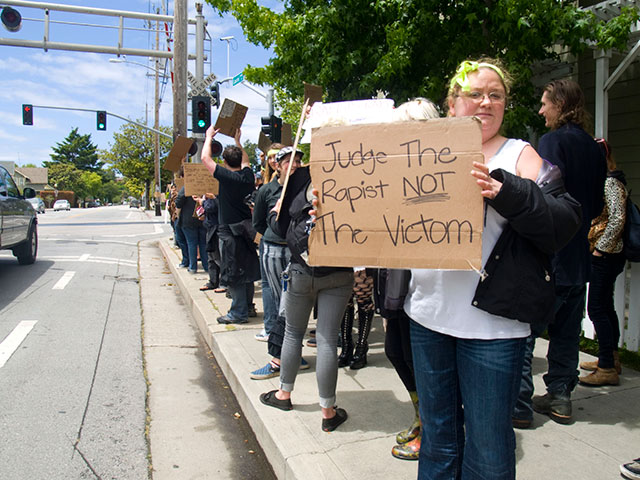
Let's get one thing straight right away: the rape case against Dominique Strauss Kahn was dropped because the woman accusing him was not considered good enough to deserve state justice. That's it.
It doesn't actually matter if you think she wasn't considered good enough because of her race, her immigration status, her past, her behaviour right after the attack, what she told the prosecutors and how she told it. At the end of the day, the state has decided that a person against whom a crime was allegedly committed is missing something essential that would make them eligible for the state's protection.
A criminal offence is an offence against the state; when you are sent to prison for looting, you are not being punished for hurting the person whose shop window you stove in, but for violating the law of the land. The shop's owner may or may not be involved in your trial, and if they are it will be as a witness only.
When you read about rape cases as much as I do though, you realise that we live in this completely topsy turvy world in which women[1] who allege rape are not treated like witnesses in a criminal trial, but litigants in a libel case: they are invested with a responsibility of proving that a crime has been committed.
Women, under this system, are not considered to be as automatically deserving of the state's full legal might backing them up like, say, elderly barbers are. Only if they prove, outside of a court of law and under unwritten rules rife with Catch-22s, that a crime has been committed against them, will the state mobilise for the defence of its own laws.
What this means in effect is that there is a shadow court trailing women in high profile rape cases: while it is their alleged attacker who is facing prosecution, he is at least protected by the legal principle of presumed innocence. The accuser meanwhile has no such protection, because technically she is only a bystander in a showdown between the state and the accused, and witnesses have few rights in the criminal system (anonymity being one of the few available ones, and that has been recently challenged in the UK).
Women get caught between the social impulse to blame them for sexual transgression and exonerate the men involved (this is much more pronounced for famous, powerful men to whom many have given their allegiance), and the lack of any systemic barriers to doing so. They are placed in the impossible position of having to justify the criminality of the attack on them - somehow, passively and without any access to the apparatus of the legal system, to make a case that they are as important and as capable of being attacked as a barber shop.
+++
[1] I use the word women advisedly. Men do suffer rape, at rates that though low are still completely unacceptable; but, while there are social barriers to them reporting these attacks, once they do they do not face anything like the systemic obstacles and prejudices that women do. So while rape is a problem of all sexes and genders, cases like Diallo's are a problem specifically for women.

Aug 17, 2011
Riots and tabloids and looters, oh my! A feminist reading of #UKRiots reportage
According to the Guardian data blog, 92.2% of defendants in magistrate cases related to the recent civil unrest in England are male.
That is a pretty significant gender differential; even if we take into account that women commit less crime than men in general, the rioting and looting seems to have been truly overwhelmingly a boys' day out.
And yet, if you were to get your new from the front pages of tabloids (which quite a significant proportion of people do), you'd think that there was some sort of apocalyptic outbreak of female lawlessness in the UK this August. On Friday August 12th in particular (as details of arrests and charges began to get out in a steady stream), 6 major national papers devoted their front pages to female looters: the Mail, the Sun, the Times, the Express, the Mirror and the Star. (Note that most of these stories overlap)
That's 46% of the national newspapers represented on Front Pages website, 50% if you count the Independent and i as one publication. More tellingly, all but one of the newspapers who lead with female lawlessness were tabloids, and 100% of the tabloids (not counting the Evening Standard as a tabloid) had a young woman being named and shamed on their front pages that day.
All the tabloid front pages told the story of women looting and rioting - despite the fact that women make up only 7.8% of the actual looters and rioters. Well, the ones who got caught. And then you have the mum who didn't loot or riot but was sentenced to 5 months for receiving stolen goods. Statistics are messy. That's just life.
In any case: we are not talking about some major spasm of feminine revolution, OK? (In fact: if only.)
No, if anything there is a story about toxic masculinity to be told here: a story of gang affiliation as an avenue to excitement and protection, of young men and boys who see violence and consumption as their only legitimate avenues for self expression. Of the feminisation - and subsequent devaluing - of social goods like education and empathy.
It's not the story of declining morals and crumbling families that the right wants to be told - that the right always tries to tell, in fact - but a more complex story of, actually, things being just as they were in the good old days. Except for when the good old days weren't so good.
And still we see item after item in the press about the girls and women convicted for looting or inciting riots. The naming and shaming is pretty much out of all proportion to the actual rate of participation of women and girls in the disturbances. What's going on?
Well, in part this is about editorial policy and selling papers. As Roy Greenslade writes in the Guardian, atypical, non-representative stories are attention grabbers: yet more black hooded tops can't compete with a party dress for audience draw. Nevertheless, it's instructive to consider what atypical profiles particularly draw papers: the very young, and women. Not, just to throw out some examples at random, old age pensioners, disabled people, Polish immigrants, nurses from the Philippines or members of the Berkshire Hunt (I have no idea if any members of the Berkshire Hunt rioted, but wouldn't it be fun if they did?).
It's also relevant that the majority of this focus on female transgression is coming from the most socially conservative part of the press - the tabloids. Why should that be true? Wouldn't they get more mileage out of pushing racist theories about hip hop culture and "Rivers of Blood"? Well, they do, of course - the Daily Mail lowered even its own debased journalistic standards to allow a defence of David Starkey's barmy and distasteful outburst on Newsnight. So the tabloids are keeping more than one string to their bow, but still pushing the moral panic about female transgression.
I think the context in which to understand this is twofold: one, the tabloid business model, and two, less trivially, the fundamental significance of female purity in a patriarchy.
Tabloids - and other conservative media - sell what I think of as "safe fear". A bit like a roller-coaster ride, what they provide their readers is a steady stream of outrage and disgust at the perceived (often made up) transgressions of others, the idiocy and immorality of the world around them. Vicarious and titillating, the steady stream of human frailty reassures readers of their own moral superiority (essential if they are to reconcile the cognitive dissonances inherent in being staunchly right wing) while confirming their opinions about the failure of liberal policies.
There is absolutely nothing like reading the Daily Mail or watching Fox News to convince the least informed, least intelligent and most prejudiced of readers that, by dint of intellectual superiority, they are fully justified in holding the most illiberal of opinions on issues of social and economic policy. This is the Chomskian manufacturing of consent at its very crudest: by fabricating "evidence" for the rank failure of any redistributive, humanitarian or just initiative, they help ensure these initiatives are forever relegated to the margins of democratic discourse. (PS Dan Brown novels work the same way. I'm just saying!)
And, to segue smoothly into my send point, misogyny is pivotal to maintaining this phantasmagoria. It is not in the least coincidental that The Sun has its Page Three girls and the Mail tops any other online publication in number of pictures of women in bikinis. The exploitation of the female image and ideas of femininity to manufacture social order exist on a spectrum, a continuum of opprobrium in which it is possible to find a balancing point from which to sexualise the female form while demonising female sexuality, and by extension female agency.
The extreme end of this spectrum is is honour killings: when a society invests its entire identity in the sexual purity of its women, nothing short of eliminating nonconforming individuals entirely can prevent transgressions turning into social upheaval. Nothing but a monstrous sacrifice (by male relatives who, I'm sure, love their sisters, daughters and cousins, and don't "choose" to kill them in the shallow consumerist way we think of the word) can reaffirm the commitment of the family or tribe to the prevailing mores. In fact, female genital mutilation operates on a similar plain, but in a preventative, pre-emptive fashion.
OK. British tabloids don't pour acid on people. I get that the examples I used can seem just a little bit extreme and maybe even far-fetched. But. Our society is not free fro misogyny; far from it. One in ten young women (and twice as many young men) believe that women can be blamed for violence committed against them. We're not quite as far from the lawless villages of northern Pakistan as we'd like to think, you know? And who, above all, peddles and encourages these antiquated, violent, retrograde attitudes? Who spreads moral panic about "ladettes", or young women binge drinking and peeing on the street, or the transgressive and nihilistic behaviour of self-destructive, troubled pop stars? You got it - the right wing, conservative media.
So for the tabloids, sticking women on the front page in the teeth the fact that 92% of looters convicted so far are male is the natural and only choice. It's is a double dip of win: they get to stoke fear of massive social upheaval by coding feminine transgression as being somehow emblematic of these riots, thereby making them "worse" - scarier, more deeply disruptive, viscerally immoral. Out of control women are qualitatively worse than just loss of control.
And they get to sell copy, by pandering to the very misogyny they thrive on spreading, stoking then stroking the fears and prejudices of their readers. Reassuring the flog 'em and hang 'em brigade that in fact, if we only flogged and hanged more people, then everything will be OK, and the scary pinko liberal feminazi looters won't be able to come for our gas guzzlers and our porn stash with their single benefit scrounging organic solar recycled climate conspiracy.
As I say, the story of "why so many men?" is more interesting and more important - and ultimately, more feminist - than the ridiculous attention grabbing focus on a few women. But the book on that will be written over decades, and it will be written by experts and academics. The tabloids though are so transparent in their motivations I live in wonder at their continual survival.
Jul 28, 2011
Reclaiming the medical narrative around abortion
Since the election of a Conservative led government in June 2010, we’ve seen a series of attacks on women’s rights, from the economic to the legal to the medical. The one that scares me, personally the most is the campaign against abortion and contraception, because it has the potential to increase human suffering not only for the current generation of women, but for the next generation of unwanted or severely disabled children they are forced to bring into the world.
The trend is a legitimate worry: in the US there were 80 different laws passed this year restricting access to abortion. Several states, chief among them Kansas but others as well, have become de-facto zones where abortion is illegal, in that it is impossible to obtain. And this enormous spike in legislation didn’t just come out of the blue – it is the culmination of decades of insidious and well organised work to prepare the ground through steady erosion of public support for women’s health through a campaign of polemic, misinformation and obfuscation.
We are not immune to this stream in public thought in the UK, and in fact I would argue that US-based propaganda has substantially prepared the ground for a similar move to legally restrict abortion over here; already the public, chiefly through the collusion of the right wing press, holds a mostly unrealistic conception of abortion as a traumatising, sordid experience undergone by feckless, chaotic teenagers who are too stupid or lazy to worry about contraception and who get to near end of their pregnancy before they remember to seek help “evading their responsibility”.
This is of course a wildly distorted and histrionic picure, and yet the Department of Health is actually considering changes to the way abortion support is provided today that may make it easier for anti-abortion groups to corner and abuse vulnerable women, on the strength of “common sense” objections from two MPs who have no sense at all, common or otherwise, and who seem to me to be arguably acting in bad faith on the behest of overseas Christian organisations intent on recriminalizing abortion.
One of the paths to success and public support these two MPs are taking is the path of framing the debate n language they can control the meaning of. This is a well known tactic, and we see it in operation in all kinds of areas of public discourse. After the misleading and disingenuous term “pro life”, of course, my favourite is the fascinating history of the phrase “politically correct”, so beloved of right wing columnists like Richard Littlejohn.
This tactic is more common in the right than on the left; I say this not to disparage the ideological right, but as a simple statement of the fact that we on the left are often hampered by our own aspirations to intellectual rigour, and can therefore find ourselves unable to mount an effective response to things like outright denial of science being self-servingly labelled “scepticism”, or a refusal to accept science teaching in the science classroom presented as a “controversy”. We are getting a bit better at heading off these rhetorical traps and dealing with them when they appear; the terms “climate change denialist” has gained some currency for example.
Similarly, I would like to propose a change in how we talk about abortion. Rather than the awkward and easily distorted construction “women seeking abortion”, “women considering termination”, “women with unwanted pregnancies” etc., I suggest we consolidate all cases of medical intervention in pregnancy under the umbrella term “crisis pregnancy patients”.
To me this captures the essence of what a woman in all situations potentially resulting in a termination: that there is a human being with a problem here, and a medical procedure as part of the solution. After all, we don’t call cancer patients “people seeking chemotherapy”, do we? In all other cases of people seeking legal medical treatment, we concentrate on the problem/condition the treatment is supposed to address; it’s only when we talk about what we consider trivial concerns of silly women that we centre on the procedure, as in the case of cosmetic surgery and, well, abortion.
There are two main objections that I can anticipate to this approach:
1. That switching to “crisis pregnancy patient” is no better than right wing propaganda in obfuscating and masking the real issue with consensus-seeking language.
This is an important objection and I want to deal with it very seriously. I don’t think what I’m doing here is putting a “spin” on abortion to make it less controversial. That is certainly not my intent. I think, rather, that we have swung too far into the rhetorical ground favoured by the opposition, of masking the realities around abortion in order to create a faux-controversy under cover of which it is easy to sell restrictive and cruel new proposals (like girls saying no to their abusers) to the public.
When we agree to talk about “women seeking abortions”, we implicitly agree that an abortion is what women in this situation want. This is obviously irrational – why would anyone want an invasive medical procedure? – and supports the wider portrayal of women who have abortions as feckless, irresponsible, stupid and in need of protection from their own moral failings. The reality is that women undergoing abortions don’t want abortions: they’d rather not be having an abortion at all thank you very much, because they either a) don’t want to be pregnant or b) want to be a mother very badly but something has sadly happened to make that an impossible option.
Abortion is not the “goal” of women accessing the service of BPAS or Marie Stopes; the goal is to not be pregnant. The condition from which a woman wants medical deliverance is not the condition of “not having an abortion” – it is the condition of “having an unwanted or unviable pregnancy”. Abortion, like all medical procedures, is the way of getting from A (crisis pregnancy) to B (no pregnancy).
Tracey Emin I think said it best: “When you’re pregnant, you don’t make up your mind that you want an abortion – you make up your mind that you can’t have a child. Which is a very different thing”.
I hope I’ve convinced you that I am not proposing a rhetorical sleight of hand, but a serious realignment of the discourse that puts women and their medical needs at the centre. Which brings me to my next possible objection
2. That the term “crisis pregnancy patient” dehumanises women by taking them out of the narrative of abortion.
Rather what I intend is to undo the damage caused over decades by the over-concentration of anti-choice propaganda on “the baby”, and bring the woman back into the centre of the debate.
If you hang out on abortion related online discussion threads as much as I do (for general mental wellbeing, I don’t recommend it), you come across surprisingly many people whose main objection to the availability of abortion is openly and nakedly the discourse of choice and rights for women. Protected by the anonymity of the internet, they freely admit that what chiefly offends them about reproductive rights is the notion that a woman’s “right to choose” is something to take into consideration in the first place. They quickly drop, if they ever upheld, the pretence that this is about the rights of the unborn or any genuine debate about viability, when life begins and so forth.
These people are beyond the reach of mere persuasion; you have to plumb I don’t know what depths of dehumanisation before you can baldly claim that a whole class of people don’t deserve their bodily autonomy, or should be punished with a lifetime of unwanted parenthood for engaging in basic human functions like sex. The people who I am trying to reach with this proposal are those bamboozled by these fulminations into forgetting that abortion, contraception, antenatal care and so on are all in the same class of things enabled by modern medicine as root canals and chemotherapy, and that all human beings have an equal right to access these benefits.
This is not as uncontroversial an idea as you may think; many people, who in my view lack empathy, wish us to restrict medical access for those who are seen as being the architects of their own health problems, such as those suffering from obesity, or smokers. And of course we already lock up drug addicts in jail rather than treat their disease. The government policy wind is blowing very much in the direction of taking more and more entitlements to basic human dignity away from people, be it reducing mobility allowances for the disabled or cutting care and respite services at local level. I don’t want women as a class to slip under this descending portcullis of malice, and if I can help towards that just a little by reminding people that women are NHS patients too, then I think it’s worthwhile to try.
So to reiterate: I propose that henceforth, when we talk, write, tweet, blog, comment or argue about abortion provision and access, we refer to the people impacted by any change in the existing legislation as crisis pregnancy patients.
Thoughts? Comments? Will you do it, and if not, why not?
Jul 18, 2011
The DoH Responds to Our Letter
Today I received a response from the Department of Health to the letter we sent to Anne Milton MP, the junior minister in charge of public health, regarding the proposed changes to privision of counselling to abortion patients.
Here is the reply in full:
Thank you for your correspondence of 4 and 5 July to Anne Milton about abortion counselling. I have been asked to reply.
The Department of Health is aware of Frank Field's and Nadine Dorries' concerns and Anne Milton recently met with them to discuss this issue.
The Department is drawing up proposals to enable all women who are seeking an abortion to be offered access to independent counselling. The Department would want the counselling to be provided by appropriately qualified individuals. Independent counselling will focus on enabling a woman to make a decision that would benefit her overall health and wellbeing.
Independent counselling will be for those women who choose to have it and will not be mandatory. Full proposals are still being worked up within the Department of Health and it is therefore unable to provide detailed answers while this process takes place.
I hope this reply is helpful.
Yours sincerely,
[Name Redacted]Emphasis mine. While it's reassuring to have it confirmed that there's no question of making counselling mandatory (for now), it doesn't really address the problem of explicitly anti-abortion organisations being allowed access to vulnerable women.
In terms of substantive content though, I was very concerned by two things:
1. That the Under-secretary herself has not responded to us and no comment has come from her office so far (I haven't seen any in the media).
2. That the highlighted sentence conflates advice and counselling in a dangerous and potentially damaging manner; part of the value currently being provided by the likes of MSI & BPAS is precisely that they do not mix advice about medical options with counselling for those in distress.
This is not the first time I've seen this muddle-headed approach to counselling from the DoH - they seem to be ignorant of what these services that they plan to "reform" actually do.
I wrote a response to this effect, but unfortunately the email came from a "do not reply" address, so in order to get this concern addressed properly it looks like I'd need to go though the whole rigmarole of writing to them from scratch, and probably getting a reply from someone completely different with no prior knowledge of the case.
It's like working with a third rate utilities call centre, but if I get anywhere I will immediately post updates!
Jul 10, 2011
Abortion rights and the tabloids (and a bit of Richard Dawkins, too)
Pro choice demo yesterday was super awesome! you can find some photos here and some videos here. The name Nadine Dorries came up a few times, in the chanting and the placards, because she has installed herself as the mouthpiece and media spokesperson of the anti-woman movement in the latter's campaign to inveigle itself into British society as it has into that of the US - with lies, with withholding medical facts from women, with exaggerating and inventing and constantly, constantly attacking non-existent straw men[1].
Nadine Dorries relies on a sympathetic media to spread her lies. And we know who the "sympathetic media" are, don't we? Tabloids. Red tops, who claim to be responding to public opinion but, because of the amount of sheer, well, lies and invention in them, can be doing nothing but leading/informing it. Pulling public opinion further and further to the right, against trade unions, against women, against progress, against fairness and justice and equality.
Well, tomorrow they will do so a little less than today - because one of them, one of the more pernicious and disgusting, is no more. And that, friends, is good news for a feminist like me, as well as for pretty much every other right thinking individual. Sure, Rupert Murdoch hates women maybe a little less than Paul Dacre has, but make no mistake - misogyny is one of the cornerstones of his empire, as it is one of the cornerstone of all patriarchy in its capitalist incarnation[2].
Henry Porter writes lucidly in the Observer about what this scandal means to the political system in the UK, the extent of the corruption revealed, the level of damage to public discourse and public trust. Read it, it's really good. He does say just one thing I'm not sure I can agree with though:
News of the World journalists ordered the hacking of as many as 4,000 people including grieving relatives of soldiers and of terror and murder victims because they thought their paper was untouchable. (emphasis mine)
D'you know, I don't think that's true? I can't believe that it is possible to be at the head of this kind of commercial empire and be complacent. On the contrary - you have to be paranoid, as Andy Grove of Intel would say. I think they did it because they were desperate, hungry for copy, sensationalism, scoops - at any cost. Because they were at the top and they were driven as if by the devil himself to stay at the top, or face the full consequences of the long fall.
But it's not impossible to become complacent when you're at the top, and for that complacency to lead to an occlusion of ethics. It's a well known dynamic, which is why Porter went for it of course. And it often happens to people who have been fêted, admired and encouraged in an area of public life that doesn't directly impact on what they really consider their professional life. Like, you know, politics, if you happen to be a linguist. Or atheism when you're, I dunno, a biologist or something.
We have a nice saying in Hebrew: "the urine has risen to his head". I have no idea what the etymology is this is, but it's kind of evocative: where there used to be common sense, arrogance and self importance have imbued with, well, piss. And without question, Richard Dawkins is taking the piss. So the urological metaphor does seem apt after all.
It's easy, when you've had a lifetime of people asking for your opinion, to be misled into thinking that you opinions matter just because they come from you. Noam Chomsky has that little problem. Martin Amis does, too. These are men (funny that) who think we should listen to them because they're them, and they've been listened to for a long time. And, you know, they're wrong.
As is Richard Dawkins. Oh, he's had a good run, with both evolutionary biology and atheism. But he knows sweet fuck all about feminism, and the toe-curlingly embarrassing spectacle of him sniping in the comment section of a blog like some aggrieved teenager must go no further. Enough, Professor Dawkins. You have nothing to say on this subject that will enrich the general discourse. You are speaking without any prior knowledge[3] on the issues.
And we know what we think in the sceptic community of people who expound their strident views without any prior knowledge of the subject, don't we? It's kind of similar to what we think of tabloids and right wing demagogue politicians, really.
[1] As in the "teach girls to say no" example. We do this already of course, where parents don't (paradoxically) opt their children out of SRE education, because the curriculum includes discussion of when to not have sex. But hey, if you can make yourself sound righteous, and make women's lives a little worse, at the expense of the pinko commie state education system, why not, right?
[2]Misogyny is the biggest theme in advertising; 70% of all purchasing decisions are made by women, and advertisers have met the challenge of convincing women to choose their products by playing on and enhancing the feelings of inadequacy and self-hatred. From the cosmetics industry to toilet bleach to scented candles, the message is the same: women are dirty and unacceptable unless they spend money on our products. And advertisers own the media. Its only currently viable model for distributing mass media at a profit, which is exactly why a) The New of the World could not continue once advertisers began to pull out, and b) Murdoch is desperate for control of BSkyB and its lucrative pay per view revenue stream (to break free of advertisers).
[3] Before anyone jumps up to accuse me of not knowing anything about Richard Dawkins' feminist educational credentials: nobody who's read more than a couple of blog posts about feminism in their life would employ either the "you haven't got it as bad as some other women, so shut up" or the "there are much more important topics to discuss than your piddling little problems, so shut up" gambits. Because feminists don't tell women to shut up, duh. He did both in one paragraph, so: stupid.
Jul 4, 2011
Update on letter to Anne Milton MP
Owing to unforeseen technical difficulties*, the letter, which I planned to mail on Saturday, has been posted this morning instead. Forty seven of you excellent and socially responsible people added your names to the bottom of the letter, for which I am very grateful**.
I will post immediately when / if I receive a response from Anne Milton. I rather expect that she will respond, because that is very much the organisational culture in Parliament these days; but, just to be clear with everyone and avoid disappointment, I don't expect her response to be along the lines of "OMG you're so right, we will go and lock Nadine Dorries in the broom cupboard straight away".
This government is openly engaging in an attack on women's rights and well-being; we know this, we can see it, and so far we have been largely powerless to stop it. But it doesn't mean we should let them think they're getting away with it. My aim in writing this letter was to let the DoH know that we're watching them, and that we have a very good inkling as to where the wind is blowing with these "reforms" and "improvements".
If they're going to start attacking women's basic human rights as well as our economic standing and employability, then they're going to have to own that - because the voters are not buying any of this thinly veiled propaganda, with the Tip-Ex still dry on the "Made in the USA" logo. Now that we've sent our letter, and many other excellent people have emailed it too, or sent emails/letters of their own, the government official in charge of public health knows this to be unambiguously the case.
This much we achieved just by writing to her; if we achieve nothing else, I would still not consider this a failure or a waste of effort.
Thanks again to everyone for all the support! Mxx
* I couldn't get the £$%&@ printer to work
** I did change the wording from "I" to "We", given that the letter was now representing so many voices
Jun 29, 2011
Tell the DoH not to change abortion rules without a vote
As some of you may have heard, back in March Nadine Dorries MP and Frank Field MP proposed an amendment to the Helath Bill that will ban sexual health charities that also provide abortion, like BPAS and Marie Stopes International, from offering counselling to their patients, presumably on the grounds that they have a "conflict of interest" of some sort (this despite the fact that they are both not for profit organisations).
Whether because the Bill itself seems to have been kicked into the long grass, or because they think getting the amendment past the Lords is unlikely, Dorries and Field have been trying to get the DoH to make the desired changes to the law without actually changing the law - i.e. without a vote in Parliament. Yesterday, the DoH have announced that they are considering doing just that.
I've written a letter to Anne Milton, Parliamentary Under-Secretary for Public Health, to ask her to urgently clarify and - more importantly - justify such a presumption about the abortion providers and the decision to circumvent Parliament in changing the rules governing their services.
I'd really encourage you to write to her too, to disprove Nadine Dories's disingenuous claims on her blog that this amendment has "huge public support". Whehter you are passionately pro-choice or not, we all have a vested interest in making sure that the DoH can't meddle in our medical choices without so much as a democratic by-your-leave. Feel free to reuse or edit my letter, or simply let me know and I will add your name as a signatory to the bottom of it.
Here is the letter itself:
Anne Milton MP
House of Commons
London
SW1A 0AA
Dear Ms Milton,
I read with concern about plans by the Department of Health to make changes to the rules for provision of counselling to abortion patients, without seeking the approval of Parliament on this sensitive issue.
As you are doubtless aware, counselling is already available from the NHS, as well as charities such as BPAS and Marie Stopes. Such counselling is confidential, unbiased, medically informed and focused on the wellbeing of the woman. It is, moreover, independent – of government interference, religious and political lobbying, or the fickle mood swings of the media.
It is therefore unclear what the DoH spokesperson means when they say, as was reported by the Associated Press yesterday, that “The Department of Health wants women who are thinking about having an abortion to be able to have independent counselling”.
I urge you to clarify at the very nearest opportunity what is meant by the term “independent” in this context.
1. If it is the case that the DoH considers there to be a conflict of interest between the provision of a medical service and counselling related to the medical condition that leads to is, it is incumbent upon it to provide evidence for such a belief.
a. It is also strongly in the public interest that other such conflicts of interest are examined; e.g. cancer counselling within the NHS, Health Visitor’s advice on children’s health to parents etc.
2. If a presumption is growing within the DoH that the NHS – or any body providing a medical service, including for-profit firms/hospitals commissioned by the NHS currently or in future – cannot be seen as an honest broker in provision of mental support and counselling to its patients, this is a grave concern of the utmost urgency for public confidence in both the NHS and the DoH.
3. If, however, these proposed change, whatever they may be, are restricted only to the provision of abortion, impacting on the health and wellbeing of women, then special pleading is necessary to explain to the public
a. why not-for-profit organisations offering abortion are deemed less disinterested than other healthcare providers
b. why women considering abortion are seen as more vulnerable than medical patients considering other procedures.
4. Furthermore, it is incumbent upon the DoH to publish, with all possible alacrity, the guidelines for licensing pre-abortion counselling services to any organisations other than the likes of BPAS and Marie Stopes. The public, once alerted to concerns in this area, will be anxious to know
a. how such counselling services will be commissioned and licensed in future;
b. what medical knowledge and expertise in the field of sexual health and effective contraception commissioned bodies will be required to demonstrate;
c. how such providers will be regulated and quality controlled;
d. what safeguards will be put in place against admitting, under the umbrella of counselling, organisations whose aims are only to prevent women from accessing abortion, rather than making the most psychologically and physically appropriate choices for their own and their families’ wellbeing.
I look forward to a clarifying statement released in the nearest possible future, copied to the press offices of BPAS, Marie Stopes, The Fawcett Society and the Terrence Higgins Trust, and openly circulated in the mainstream media.
Jun 13, 2011
No seriously, where *are* the women?
In this week’s Guardian books podcast, Sarah Crown asked Orange Prize winner Téa Obreht whether it felt “limiting not to be competing with men”. Because, you know, the competition wouldn’t have been as fierce among “just” women. Cause they’re like, worse writers, innit. Just ask VS Naipaul. No, to really prove one’s chops, one should strive to compete against men, without all this “positive discrimination” stuff.
Well, you know, it turns out that the majority of books reviewed in newspapers and magazines are written by men. And the vast majority of the reviewers are – you guessed it – men. But this men-writing-about-how-jolly-good-men-are business is not as “positive discrimination”. Nope, that little private club is all just handy dandy and above board. It’s only when women seek to circumnavigate the cosy unofficial “cultural femicide”, as Bidisha calls it, that we saunter into an ethical problem, or even just one of professional credibility.
It reminded me of Richard Dawkins writing in The Ancestor’s Tale (boring book, pretty pictures) about how spurious and wicked racism is. Really, brays Dawkins, any simpleton can see that discriminating on the grounds of race is evil; but surely we do not need to compound the harm by taking any steps to rectify it that are as radical as the original discrimination! By all means, condemn racism, object to it, look down you white-dude scientific nose at it, but whatever you do, don’t actually do anything about it, or God, sorry, Dawkins, knows where we’d end up!
To which I say: meh. Meh to the idea that I’m so stupid that I’ll accept Hilary Lawson’s feeble excuses for running a cultural festival with 26% female representation. Meh to Start the Week with Andrew Marr, who still only ever have one woman on their panel each week. Meh to the notion that women being excluded from competing against men in sports events is "proof" that they would fail if they tried. Meh to those who think I can’t do the maths and arrive at a number bigger than what it currently is – in the arts, on the radio, in academia, in government – when I know that more women graduate from university, more women write and publish books, more women work in the various arts & culture institutions; there seem to be more women everywhere these days, in fact, except at the top.
And, well, y’know what? That’s just bee oh are ay en gee boring at this stage. Enough with pretending that old white men like Dawkins and Roth have anything left to say about the world that a thousand old white men haven’t said already. I am just not that into them anymore. This isn’t even really political, but a genuine lack of interest in the same old points of view, endlessly rehashed. Unlike Dawkins though, I do want something done about it, and fast (before I expire of ennui, frankly). So I’m going to the “Where Are The Women?” follow up event and planning meeting tonight, to talk to smart women about what we can do to improve the scenery in our cultural landscape. Be afraid, old white dudes; be very afraid. :)
Oh and hey, Sarah Crown? That was a really, really stupid question. Really.
May 24, 2011
What should you wear to a SlutWalk?
I have a very complicated relationship with the amount of coverage or display that my skin gets. I think most women of my background or similar - secular feminists who grew up in a traditional, religious society - would recognise the dilemmas that I had with seemingly frivolous things like skirt length while growing up.
In Jerusalem, where I grew up, what a woman wears immediately speaks volumes about her religion, her values, even her politics. Whether your skirt brushes the ground (settler), is modestly below the knee (conservative), is a voluminous part of a Mother Hubbard-like dress (orthodox) or is revealingly short (secular) gives clues to other parts of your life: what you eat (kosher/treif), who you vote for (left/right), where and when you socialise (at home or in a club on a Friday night), your sexual politics (patriarchal/permissive). The signs are not infallible, but they are ubiquitous and strong in a way that simply doesn't exist in the secular west, except for the most pious Jewish or Muslim women. And people in Israel routinely use these signs to facilitate everyday interactions, like knowing whether to shake hands with a woman, ask her for her number, ask her for directions, all kinds of normal stuff. It's not stereotyping (much), it's common sense.
So every sartorial choice is significant. Wearing light clothing (which can be seen as only sensible in the baking Israeli summers) is not just controversial but potentially dangerous. Heck, just wearing trousers can get you shouted at or even attacked with ink bombs or stones (on one memorable occasion, potatoes. It was as weird as it sounds). Wearing concealing clothing can have less violent but no less othering effects in certain parts of civic and cultural life.
So far so normal: even here in the UK, we can more or less understand the notion that covered skin = traditional attitudes. But in the febrile political and social climate of Jerusalem, certain acts of covering up can become just as transgressive, in a more nuanced way, as acts of revealing. And I don't mean transgressive like wearing the Niqab: transgressive as in, it messes with people's heads because they don't know where to slot you on their mental map.
As a teenager, I came to resent the implicit prohibitions on certain articles of clothing. Why can't I wear long skirts? Why shouldn't I wear turtle-neck sweaters? It's cold in winter! It wasn't about rebelling against a culture of objectification or anything feminist like that - I just rebelled against being told, even by "my own side", what to wear. So I wore long skirts while out drinking on Shabbat, and men were completely bamboozled by an inability to know whether they could approach me or not (and whether there was likely to be anything in it for them, frankly). I wore low-cut tops with skirt suits & opaque tights, earning myself some of the most vicious looks I've ever gotten from religious matrons who scanned me approvingly from the feet up until they came nose-to-boob with my cleavage. I played around with backless, slashed maxi dresses and see-through muu muus. I had fun, and pissed people off, which was kind of the point a lot of the time.
So, what am I really saying with this? I guess what I'm saying is that there is no "right" way for a woman to dress. Whatever we wear, it will be transgressive in some circumstances, and occasionally for counter-intuitive reason. That's why, even though I'm not mad for the supersexyfunfeminist aesthetic that's developed around SlutWalk as it proliferated around the world, I think that women choosing to wear revealing and conventionally "sexy" outfits to these events is not as straightforward a concession to the patriarchal beauty ideal as might first appear.
It's true that we live in a society that pushes women to display a narrow, manufactured image of conventional femininity to an implicitly ever present male gaze (if all males were teenage porn fans, anyway). But that by no means makes a choice to reveal one's body uncomplicated as regards patriarchy. First of all, the type of body that is shared is key: to put on display a body that deviates from the strict demands of the ideal is an extremely threatening act, because it re-appropriates the ownership of what is sexy from the mainstream to the individual.
I'm not talking about bodies with piercings or tattoos; those have been more or less absorbed by the industrial beauty complex. I mean non-thin bodies, non-young bodies, non-white bodies, non-beauty compliant bodies (not to mention disabled bodies - the horror!). Put a boob tube on one of those, and suddenly you are very far from pandering to the patriarchy; you're on a collision course with it. (Here are some examples in no particular order, so as not to label any of these brave women and men with labels they may not recognise as being authentic to them)
Even more central to the SlutWalk concept (whatever that might be - more on this in a moment) is the type of outfit that is allowed to be considered "sexy". Who gets to define sexy? Most of the time, not the women wearing the outfits. There will always be some arbiter to say what is too much, what is too little, what is inappropriate, or different, or just weird (you decide which is which). As I learned when I was a teen, the mere act of deciding what to wear for yourself and deciding for yourself what to call it - sexy, modest, chic, daring, stylish, conservative - without reference to the prevailing definitions, is an act of immense rebellion, something outrageous to fling in the face of the patriarchy just because you can. These days I've sworn off wearing skirts completely by the way, and funnily enough, that is a choice just as controversial as any skirt of any length has ever been.
Am I ambivalent about SlutWalk? Yes. Do I wish it didn't use that word? Yeah, kinda (though the process of its rehabilitation in my eyes has been greatly helped along by this excellent piece by the excellent Germaine Greer - now here's a woman who know that just living life for yourself is a provocation!). Do I agree with Sadie Doyle that a simple idea can become merely simplistic as it gains scope and popularity? Ayup. Do I want to metaphorically but nevertheless emphatically smack young women who are grooving out on their petty rebellion, using SlutWalks as an occasion to bash boring old feminists? Oh boy, do I ever. Well, look at them very sternly, anyway.
But to my fellow feminist who are concerned that the word slut + provocative outfits equal capitulation to retrograde notions of femininity and a display of female compliance with patriarchal norms, I'd just like to say that, well, perhaps you'll find that it's a bit more complicated than that. I'm not saying that I've come to stop worrying and love SlutWalk, but hey, you know what? I can't meet the challenge posed by this SlutWalker. Which tells me that looking for an answer may just as well start here as elsewhere, and I intend to at least have a good look.
Apr 16, 2011
Equality is nothing but red tape?
As part of its '"red tape busting challenge", the government is proposing to get rid of equality legislation. It's not clear whether they think scrapping the one Equality Act 2010 and reverting to the multiple bits of pieces of law we had before is good for reducing red tape or whether they just think equality is a bore and wish they could "liberate" the "market" from it, but they're asking for people's opinions. Below is mine.
***
The Government's proposal to "scrap" the above act as "red tape" is revealing in the extreme. To explain by way of example:
- Section 66 of the Act stipulates that employees should not have a clause in their employment contract that is less favourable than another employee's employment contract, on the grounds of difference of sex. It basically says that all employees should be entitled to have equitable and similar terms of employment; this seems such a basic requirement of a functioning economy that I am surprised to see it legislated for: I'd have expected it to simply have been the case everywhere, all the time.
Evidently I, and other members of the public are naive in not understanding that the simple requirement to not write prejudicial contracts for employees is a sizeable enough burden of "red tape" on companies that the Government sees fit to have it "scrapped".
What evidence does the Government have of this? Have employment contracts in the public sector been scrutinised to show that so many of them are inequitable as would require a major investment of resources by employers to correct? If so, why id the Government not sharing this important and worrying information with its public prior to proposing "scrapping" the legislation that would correct this state of affairs?
- Section 74 of the Act refers to the provision that should be made for a woman not to lose entitlements to pay increases and bonuses that she would have been entitled to had she not gone on maternity leave, because she went on maternity leave. the perceived need for this clause implies that at the moment, employers are depriving women of pay rises and bonuses they had earned while in full time work, because the pay out time falls within their term of absence - which is self evidently inequitable, bordering on fraudulent.
By proposing to "scrap" the legislation, the Government is signalling to employers that depriving employees of pay they had legally earned is an allowable action in some circumstances (when the employee is a woman, and when she is not physically in the office due to statutory maternity leave).
This is a dangerous precedent to set, and to my mind speaks to the fact that the government is proposing the "scrapping" out of a feeling that employees who "really matter" to "alarm clock Britain" (read: men) would simply never be in a position where their pay can be simply not given to them, for some seemingly plausible excuse - a dangerous and as I say, revealing assumption to make.
I am dismayed and alarmed that the Government of Britain considers protecting the people of Britain from such obvious unfairness and rapacity as illustrated in the two brief examples above unnecessary "red tape", rife for "scrapping". It shows a commitment primarily to a narrow and shrinking constituency: that of people whose lives are never touched by discrimination.
The reality of this country is that many people can and do discriminate on a variety of grounds against their fellow human beings, for reasons of principle as well as simple profit. That the Government does not consider it part of its mandate to bring these people to book is a sad reflection on the state of social cohesion in this country, a step so far removed from the rhetoric of fairness and "Big Society" as to be farcical.
My recommendation to the Government is to implement the Equality Act 2010 in its entirety without delay, especially with regard to the new provisions such as pay equality audits. Only in an environment of transparency can fairness be seen as well as talked of, and only then can we begin to build a truly big - in the sense of broad, inclusive, and all-encompassing - society.
You can find the consultation papers and respond here. Hat tip to Anna for sending round the link and prompting me to comment!
Apr 5, 2011
Limiting access to abortion is about hatred of women, nothing else
Here's what I don't understand about this most recent attempt at attacking women's liberties from Nadine Dorries: under British law, and abortion can only be granted if the pregnancy risks causing "grave permanent injury" to the physical or mental health of the woman. Two physicians must countersign any decision to grant an abortion after having interviewed the woman, meaning that both need to be in agreement that likely mental health harm may indeed occur as a consequence of enforced pregnancy, labour and motherhood. Unless you live in Northern Ireland of course, in which case fuck you and your mental health, who gives a shit.
Likewise in order to gain access to the so called "morning after pill", a drug that inhibits conception (not terminates a pregnancy, as is often misleadingly claimed), one needs a prescription, which means having at the least a telephone conversation with a GP and explaining the circumstances to him, justifying one's fears and decision to request the drug and so on. Sharing quite a bit more detail about one's sexual activity than a GP would normally be entitled to pry into, frankly.
Even in the case of the contraceptive pill - which is rightly and admirably provided free of charge in the UK - the GP is a gateway through which women must access the treatment they need and deserve. Needless to say, more invasive forms of contraception (IUDs, tube ligation etc.) require even more negotiating, and easily fall prey to the caprices and clinical prejudices of individual doctors.
I know that some people, mostly those who will never need an abortion (read: men and Anne Widdecombe) have this notion - half nightmare, half sexual fantasy - that since the 1967 Abortion Act was passed, women haven't needed to bother with "taking responsibility" for contraception, because all you need to do is walk into Boots, five months pregnant, spread your legs for 20 minutes, and have the inconvenient consequence of your filthy immoral lifestyle taken out, immediately and for free.
Well sorry lads, but it ain't like that at all. Women are actually curtailed already, not only from freely and directly exercising their right to bodily autonomy in case of an unwanted impregnation (a right that, unlike in the US, they don't actually possess under UK law), but we're not free to access most forms of contraception how we want, where and when we want, either.
We already, in effect, have to get "mandatory counselling" before making any reproductive choice, which means that while I completely agree with Laurie Penny's point that with this proposal, Dorries & Field are treating women as if they were all alcohol soused sows who take all comers against the wall for the simple pleasure of ripping ickle babby toesie wosies out of their own uteruses with unwashed hands, in matter of fact she shouldn't be all that worried, because hey ho, British law already kind of treats them like that anyway.
So no, I don't really buy the "counselling" angle. I don't for one microsecond believe that any fibre of Nadine Dorries's tiniest organ has any faith whatsoever that said "counselling" is either necessary or beneficial. This is about using these so called "crisis pregnancy" centres to spread lies, misinformation, false medical statistics, false mental health statistics and shame, with one purpose and one purpose only: to force or manipulate women into pregnancy and labour against their will, and against their initial instincts and better judgement.
Think for a moment just how cruel this would sound if the ickle babby toesie woesies weren't being used as a smoke screen to distract attention from the reality of it: someone wants to take your body, and force you to have something inside of it for nine months, something that will change your metabolism, affect your sleep, digestion and blood pressure, something that will distort your bones and stretch your skin, rearrange your internal organs and change the way your brain chemistry works, and will eventually burst out of you, Alien-style, with great pain and possible grave and permanent injury.
And we think the Spanish Inquisition were evil for only hammering nails under people's fingernails for a few hours.
Why would Nadine Dorries want to do this, I hear you ask? Well, we could tie ourselves into knots claiming that she just loves ickle babbies (she's against welfare for actual babbies, so not sure on that one), or how the foetus has rights too (it doesn't, not under any accepted conception of human rights law), or how it's all about religion and what God said (nothing, abortion isn't mentioned in the Bible). Or we can just use Occam's Razor and admit that opposition to abortion is probably about hatred of women and a desire to punish them for being so hateful with enforced pregnancy, labour, and motherhood. Because that's what it is.
This isn't the first time that US-style anti abortion tactics have been imported to the UK, nor is this idea of mandatory counselling an original one. There are many states that have all sorts of laws making it more difficult for women to access abortion: waiting period laws, parental notification laws, mandatory counselling, mandatory ultrasounds and so on.
The reason they gained purchase in the US, and the reason I fear they will gain purchase over here - for all that it's tempting to dismiss Dorries as a monomaniac crank - is that they play to the well established, unexamined, but deeply misogynist belief that women are just too stupid to know what they want, and that if we don't rub their noses good and hard in the reality of their physical condition, there's no way that they'd be able to make an intelligent choice.
Up to now, I've mostly not really worried about good old Nadine. Women in the UK are not dependent on the whims of private corporations and individuals for access to health care, and people here do in general have a higher level of science understanding that protects them from being influenced by grisly doctored images of fake "aborted foetuses" wielded outside clinics. But this one I fear may stick, and it's telling that she's already got a man to co-sponsor the bill with her.
British people are just as likely as any other people in the world to be of the implicit belief that women, rather than being fully sentient human beings, are a special, slightly brain-addled case of the homo (hah) sapience species, - homo sapience birdensis, perhaps? - too easily distracted by footwear, cocoa derivatives and the colour pink from making really serious decisions or genuinely understanding what is going on with and inside their own bodies. Liz Jones has made a career out of playing up to that stereotype, and I can just about see the Mail disingenuously supporting this initiative as a "reasonable" attempt at "balance", feeding neatly into the bizarre implied argument that GPs somehow have a "vested financial interest" in increasing the number of abortions that makes them unreliable single sources of advice (which is probably the craziest and least well-tailored bit of this American import: fair enough when your doctor works for a huge corporations, but GPs? Really? They're only like the most trusted professionals in the country).
While Nadine Dorries and Frank Field waste Parliament's time and taxpayers' money peddling this hateful bullshit as a cover for their extreme woman-hating, by the way, funding to a wonderful organisation that really does educate people about reproductive health and abortion is likely to be slashed. Do dig in your pocket for that fiver that'll help them reach their extraordinarily modest goal of £30,000 to continue their awesome work, even if you can't really be bothered getting excited about al this Nadine Dorries business.
Subscribe to:
Posts (Atom)